
Microsoft Fabric Analytics Engineer Associate (DP-600): Worth It for AI-Focused IT Pros?
AI projects rarely fail because a team cannot name a model. They fail because data is inaccessible, poorly governed, inconsistent, or impossible to operate at scale. Microsoft Certified: Fabric Analytics Engineer Associate (exam DP-600) targets that operational layer.
This is one certification—not a general Microsoft certification roundup. It is a practical choice for IT professionals moving toward Microsoft Fabric, analytics platforms, and the data foundations that support AI workloads.
Quick verdict
| Category | Verdict |
|---|---|
| Provider | Microsoft |
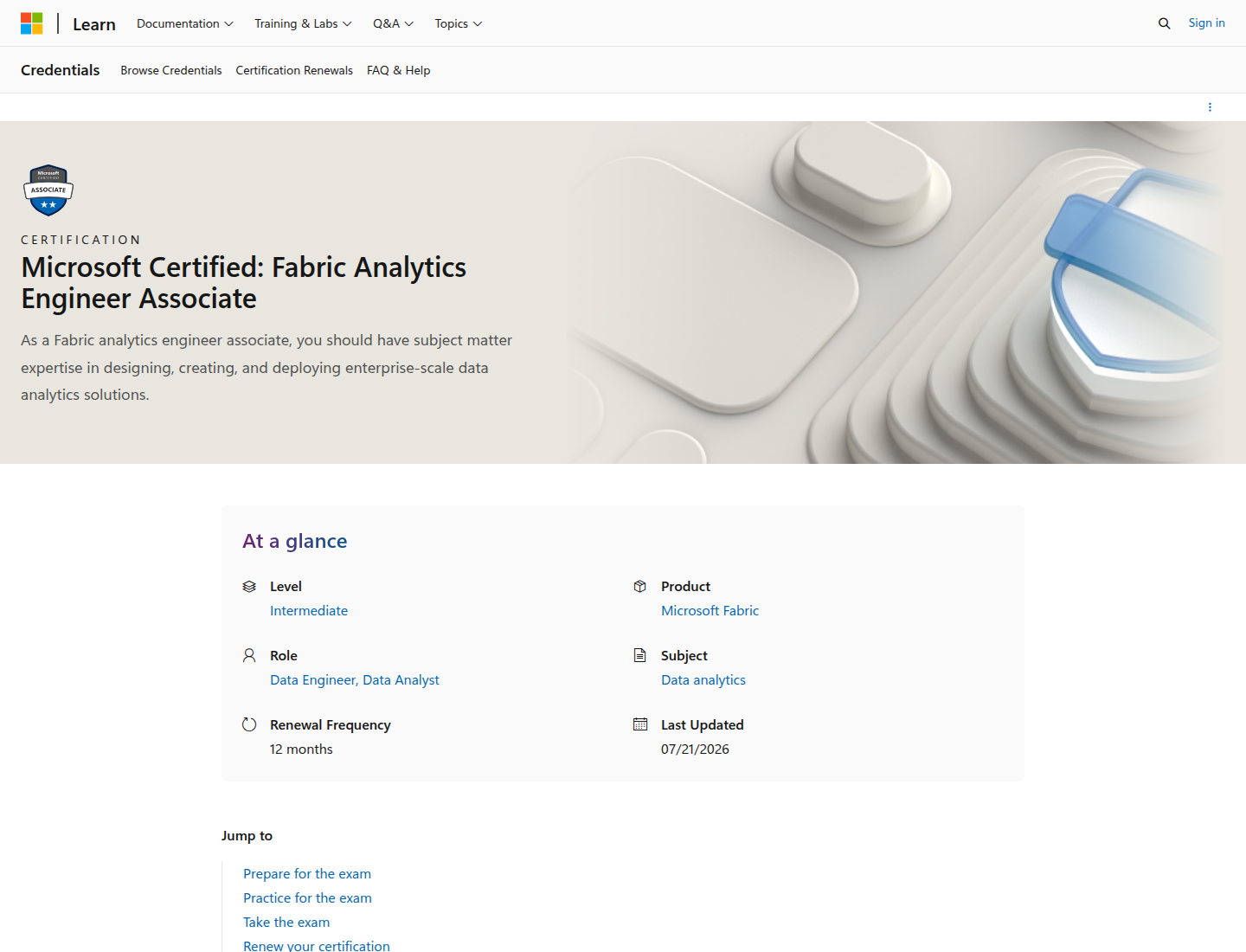
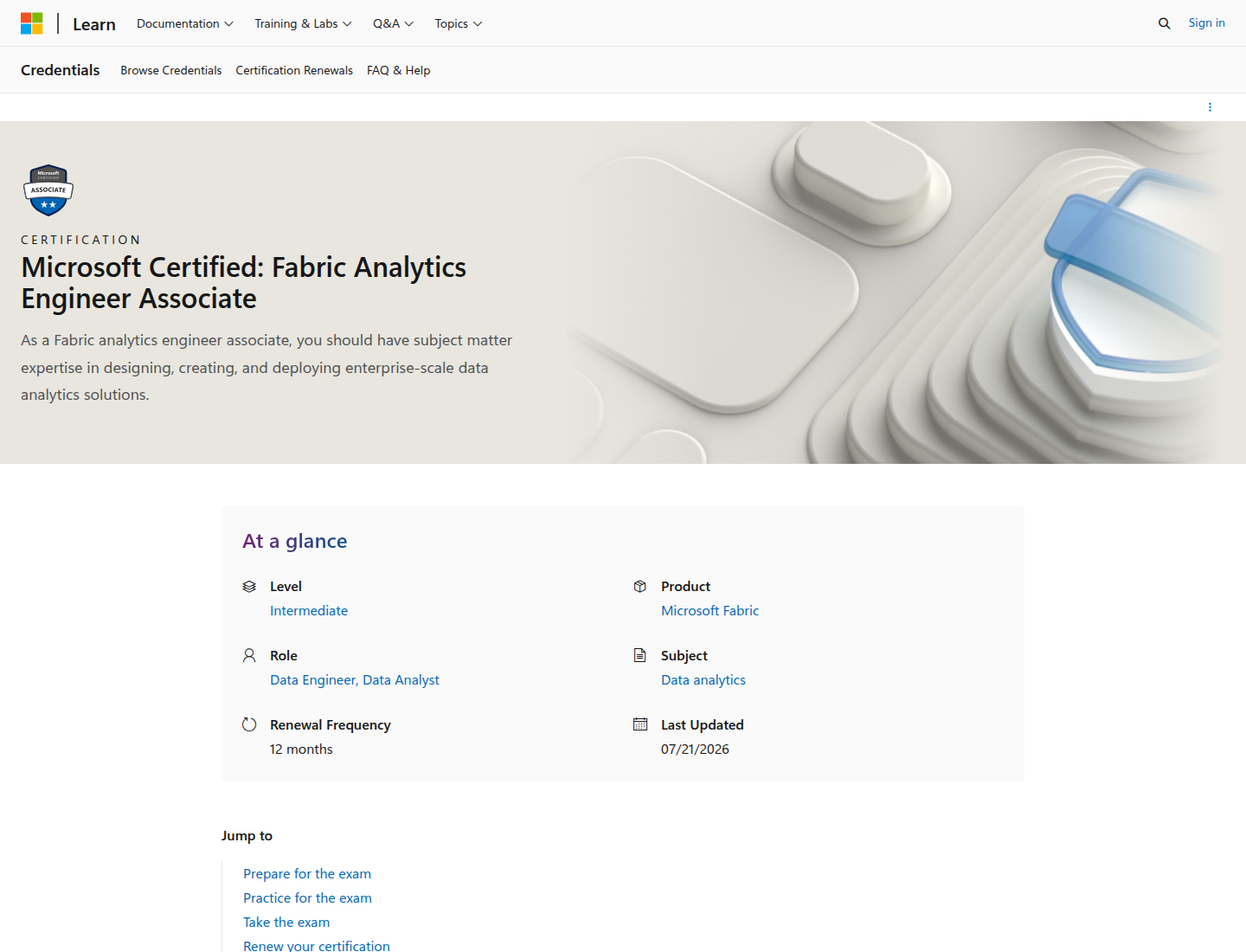
| Credential | Microsoft Certified: Fabric Analytics Engineer Associate |
| Exam | DP-600: Implementing Analytics Solutions Using Microsoft Fabric |
| Level | Intermediate |
| Best fit | IT pros supporting Microsoft data, analytics, governance, or AI platforms |
| AI relevance | Indirect but substantial: reliable, governed data for AI and BI |
| Main limitation | It is not a model-development or generative-AI certification |
| My take | Worth it when Fabric is part of your organization’s data or AI roadmap |
Official page: https://learn.microsoft.com/en-us/credentials/certifications/fabric-analytics-engineer-associate/
What DP-600 actually validates
Microsoft describes the role as designing, creating, and managing analytical assets such as semantic models, warehouses, and lakehouses. The work includes preparing data, securing analytics assets, and implementing semantic models.
The certification expects you to work across teams: stakeholders define business requirements while architects, analysts, engineers, and administrators help deliver the platform. You should also be comfortable with SQL, Kusto Query Language (KQL), and Data Analysis Expressions (DAX).
That combination makes DP-600 more than a dashboard credential. It tests whether you can make an analytics environment usable, secure, maintainable, and performant.
Exam scope and current format
Microsoft’s certification page and DP-600 study guide currently identify three assessed areas:
- Maintain a data analytics solution (25–30%): workspace and item access, row/column/object/file-level controls, sensitivity labels, endorsement, version control, deployment pipelines, impact analysis, and XMLA-based management.
- Prepare data (45–50%): connections, OneLake catalog and Real-Time hub discovery, ingestion, transformation, star schemas, joins, data quality, SQL, KQL, and the Visual Query Editor.
- Implement and manage semantic models (25–30%): storage modes, relationships, DAX calculations, calculation groups, field parameters, large semantic models, Direct Lake, incremental refresh, and performance improvements.
The current Microsoft page states that the assessment is 100 minutes, is proctored, and may include interactive components. The exam is available in English, Japanese, Simplified Chinese, German, French, Spanish, and Brazilian Portuguese. Microsoft lists a passing score of 700 or greater in the study guide.
Microsoft role-based certifications expire after 12 months. Renewal is available at no cost by passing the associated online assessment on Microsoft Learn.
Why this matters for AI-supporting IT teams
DP-600 does not teach prompt engineering or neural-network training. Its AI value is architectural:
- AI needs dependable data. Lakehouses, warehouses, semantic models, and transformation workflows determine whether downstream copilots and analytics are trustworthy.
- Governance is an AI control. Sensitivity labels, workspace permissions, row-level security, and lineage reduce the chance that an AI-enabled experience exposes the wrong data.
- Operations still matter. Deployment pipelines, version control, refresh behavior, impact analysis, and performance work are the difference between a demo and a supportable service.
- IT teams become better partners. Understanding Fabric lets a systems or endpoint engineer communicate with data engineers instead of treating AI workloads as an opaque application.
The strongest use case is an IT professional who already manages Microsoft 365, Entra ID, Power BI, Azure, or service operations and is being asked to support a Fabric or AI data platform.
The practical assessment challenge
The difficult part is not memorizing product names. It is deciding how a real analytics environment should be designed and controlled. Expect preparation to involve hands-on work with:
- OneLake and Fabric data stores
- lakehouse and warehouse modeling
- SQL, KQL, and DAX queries
- semantic-model relationships and performance
- Direct Lake and refresh behavior
- workspace, item, row-level, and sensitivity controls
- deployment and lifecycle management
For a desktop engineer or sysadmin, the unfamiliar area is usually semantic modeling and DAX—not access control. For a data analyst, the reverse may be true: platform security, deployment, and operational ownership deserve extra study.
A preparation plan for IT professionals
1. Map your existing experience
Separate what you already know into platform operations, security/governance, data transformation, and modeling. Do not assume PowerShell or Microsoft 365 administration transfers directly to DAX and semantic-model design.
2. Build one small Fabric project
Create a lakehouse, ingest a modest dataset, transform it, and expose it through a semantic model. Add a security rule, test refresh behavior, and document the lineage. A small end-to-end build is more valuable than reading every feature page.
3. Study the measured percentages
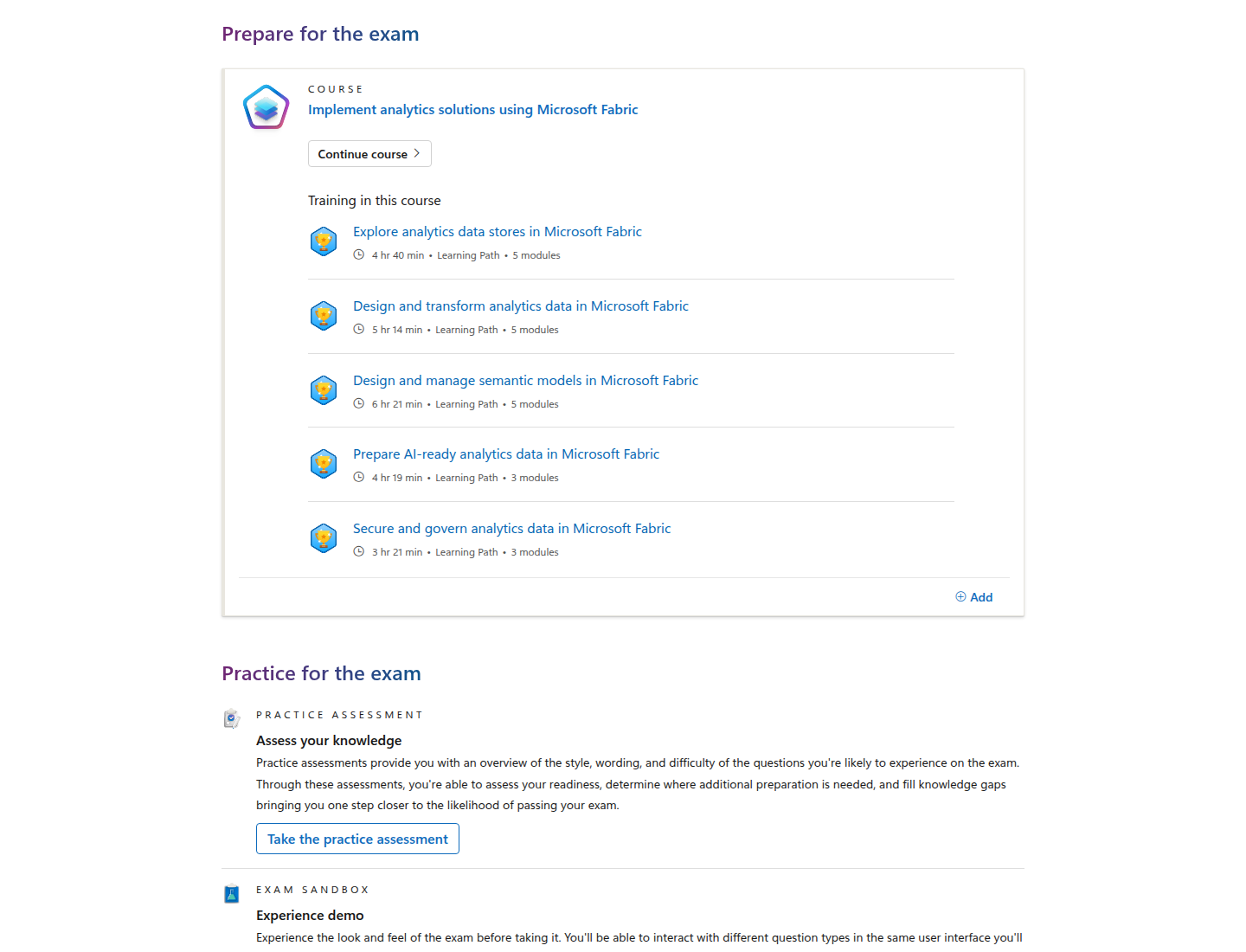
Start with Prepare data, the largest domain at 45–50%. Then split time between governance/lifecycle and semantic models. Use Microsoft’s official study guide and practice assessment to identify weak areas rather than treating practice questions as a substitute for hands-on work.
4. Practice explaining trade-offs
Be able to explain why you would choose a lakehouse versus warehouse, Direct Lake versus another storage mode, or workspace-level versus item-level access. The certification is testing engineering judgment, not only syntax.
DP-600 versus an AI certification
If your goal is to build AI applications, an Azure AI or generative-AI credential is a more direct signal. If your goal is to operate the data layer that AI applications depend on, DP-600 may be the better fit.
Choose DP-600 when you want to:
- support Fabric adoption or migration
- own analytics governance and lifecycle management
- move from endpoint or systems operations into data-platform operations
- become the bridge between Microsoft infrastructure and AI/data teams
Skip it for now when your target role is primarily model training, prompt design, or application development and your employer has no Fabric footprint.
Final answer: is DP-600 worth it?
Yes, for the right IT professional. Microsoft Fabric Analytics Engineer Associate is a credible intermediate certification for people who need to make data platforms secure, modeled, observable, and usable by analytics and AI teams.
It will not prove that you can train a language model. It can prove something many AI projects need more urgently: that you understand how governed data is prepared, delivered, protected, and maintained in a Microsoft-centric environment.
If you already work around Microsoft identity, security, operations, or analytics, build one small Fabric project before booking the exam. That practical step will reveal whether DP-600 supports your career direction—and make the certification preparation substantially more useful.