Google Cloud Professional Data Engineer: Worth It for IT Pros?
If you work in IT long enough, you eventually run into a familiar problem: everyone wants “AI,” but the real work is still data plumbing, access control, monitoring, and reliable delivery.
That is why the Google Cloud Professional Data Engineer certification is worth a look for sysadmins, desktop engineers, and IT support leads who want a credible cloud credential that touches the parts of AI projects most teams actually struggle with.
This is not a model-training exam. It is a practical data-platform certification built around collecting, transforming, storing, and delivering data at scale. That makes it relevant to modern AI work because every useful AI project still depends on clean data pipelines, governance, and secure operations.
Quick verdict
| Category | Verdict |
|---|---|
| Best for | IT pros who want a respected Google Cloud data credential with AI-adjacent value |
| Provider | Google Cloud |
| Format | Professional certification exam |
| Depth | Intermediate to advanced |
| Time commitment | Moderate; better suited to experienced cloud/data practitioners |
| Practical ROI | Strong for data platforms, analytics, governance, and AI pipeline support |
| Biggest limitation | Not an entry-level AI badge and not a hands-on coding portfolio credential |
| My take | Worth it if you support data-driven or AI-enabled workloads and want a stronger cloud signal |
Official page: https://cloud.google.com/learn/certification/data-engineer
What the certification actually is
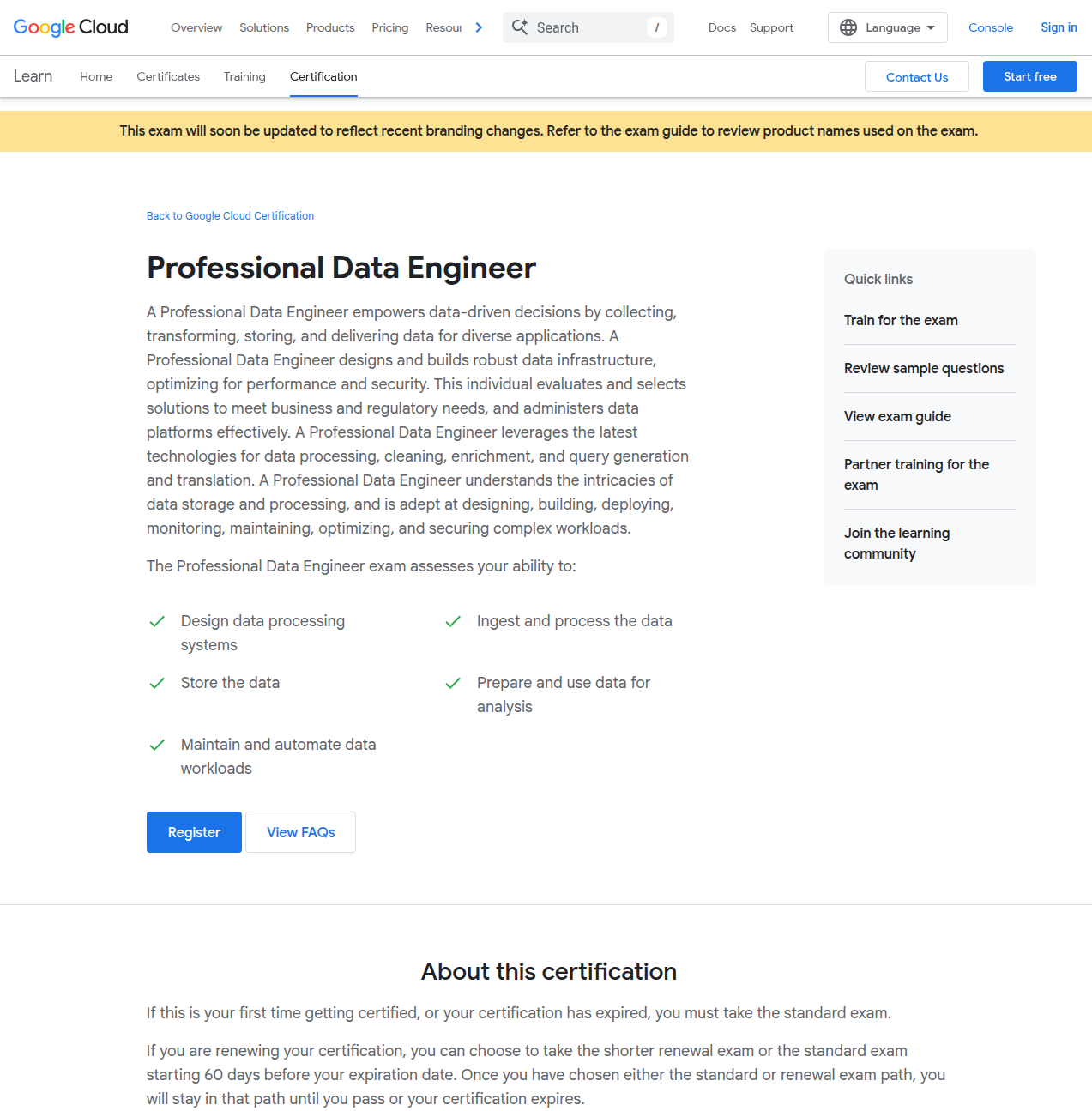
Google describes a Professional Data Engineer as someone who empowers data-driven decisions by collecting, transforming, storing, and delivering data for diverse applications.
That sounds broad, but it is exactly why the exam matters.
Modern AI systems are only as good as the data behind them. If you cannot design data processing systems, move data securely, and keep workloads automated and reliable, you are not really ready for serious AI operations.
The exam assesses your ability to:
- design data processing systems
- ingest and process the data
- store the data
- prepare and use data for analysis
- maintain and automate data workloads
What is inside the exam
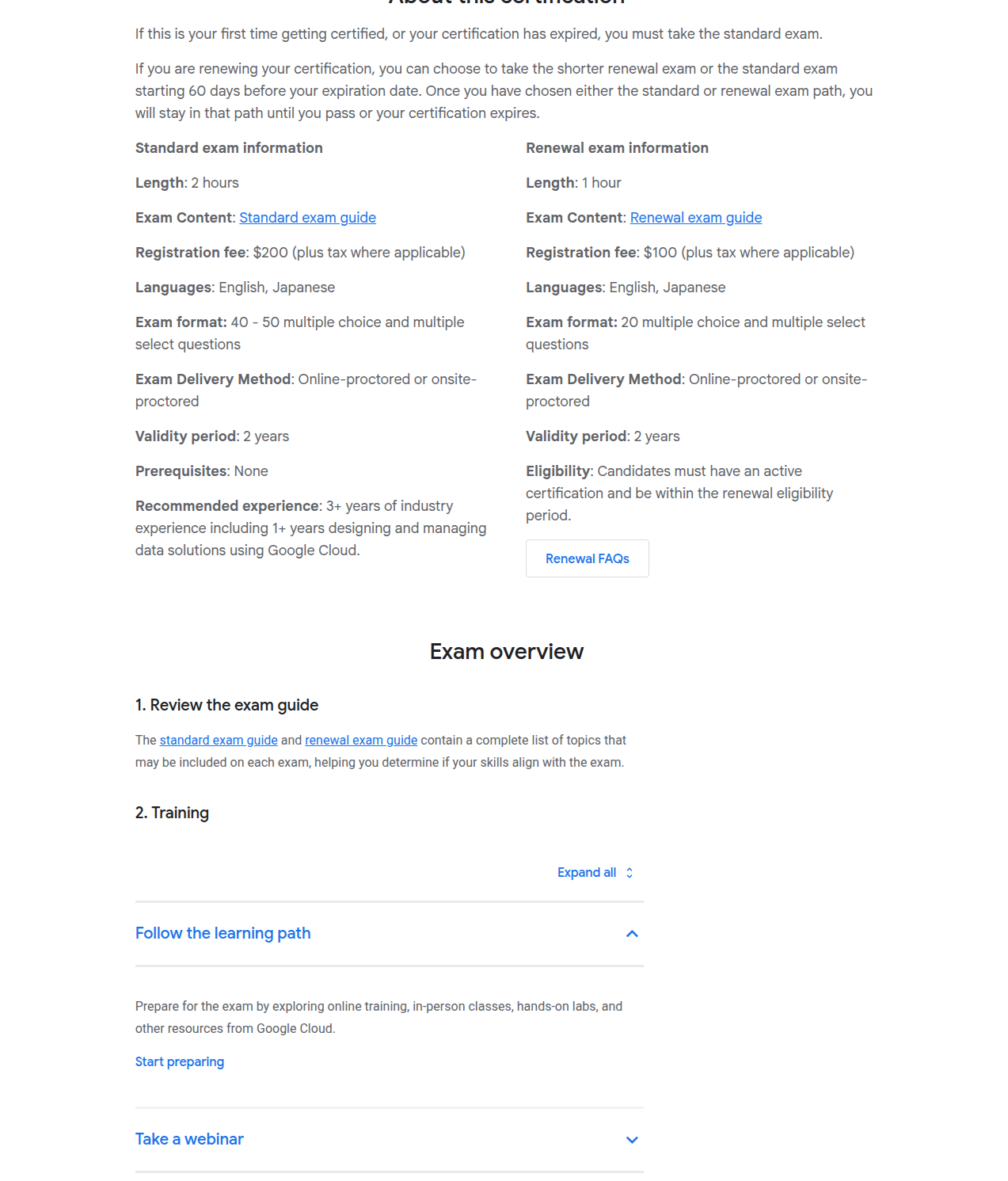
The official page gives a useful picture of the certification depth:
- Standard exam length: 2 hours
- Standard exam fee: $200 plus tax where applicable
- Format: 40 to 50 multiple-choice and multiple-select questions
- Delivery: Online-proctored or onsite-proctored
- Validity: 2 years
- Prerequisites: None
- Recommended experience: 3+ years in industry, including 1+ years designing and managing data solutions using Google Cloud
There is also a shorter renewal path for active holders:
- Renewal exam length: 1 hour
- Renewal fee: $100 plus tax where applicable
- Format: 20 multiple-choice and multiple-select questions
- Validity: 2 years
That renewal structure is useful if your employer wants to keep cloud credentials current without forcing a full retake every cycle.
Why IT pros should care
A lot of AI talk in IT starts with chatbots and ends with confusion.
In reality, the most valuable work usually sits one layer below the flashy demo:
- moving data from line-of-business systems into analysis platforms
- validating who can access what
- keeping pipelines monitored and recoverable
- making sure workload automation does not break during change windows
- preparing clean data for analytics and downstream AI use
That is where this certification is useful.
For desktop engineers and sysadmins, the practical ROI shows up in real-world support tasks:
- understanding how data platforms are structured before you troubleshoot them
- talking more credibly with data, BI, and AI teams
- supporting secure ingestion and storage workflows
- evaluating whether a problem belongs in ETL, governance, or application logic
- broadening your resume beyond endpoint and identity work
What the overview section signals
The certification page does a good job of making the job role concrete.
Google frames the role around designing robust data infrastructure, optimizing for performance and security, and administering data platforms effectively. That is a strong signal that this credential is not just about theory.
It is also a useful bridge credential for IT professionals who want to move closer to analytics, cloud operations, or AI platform support without jumping straight into machine learning model training.
Take the next step section matters more than it looks
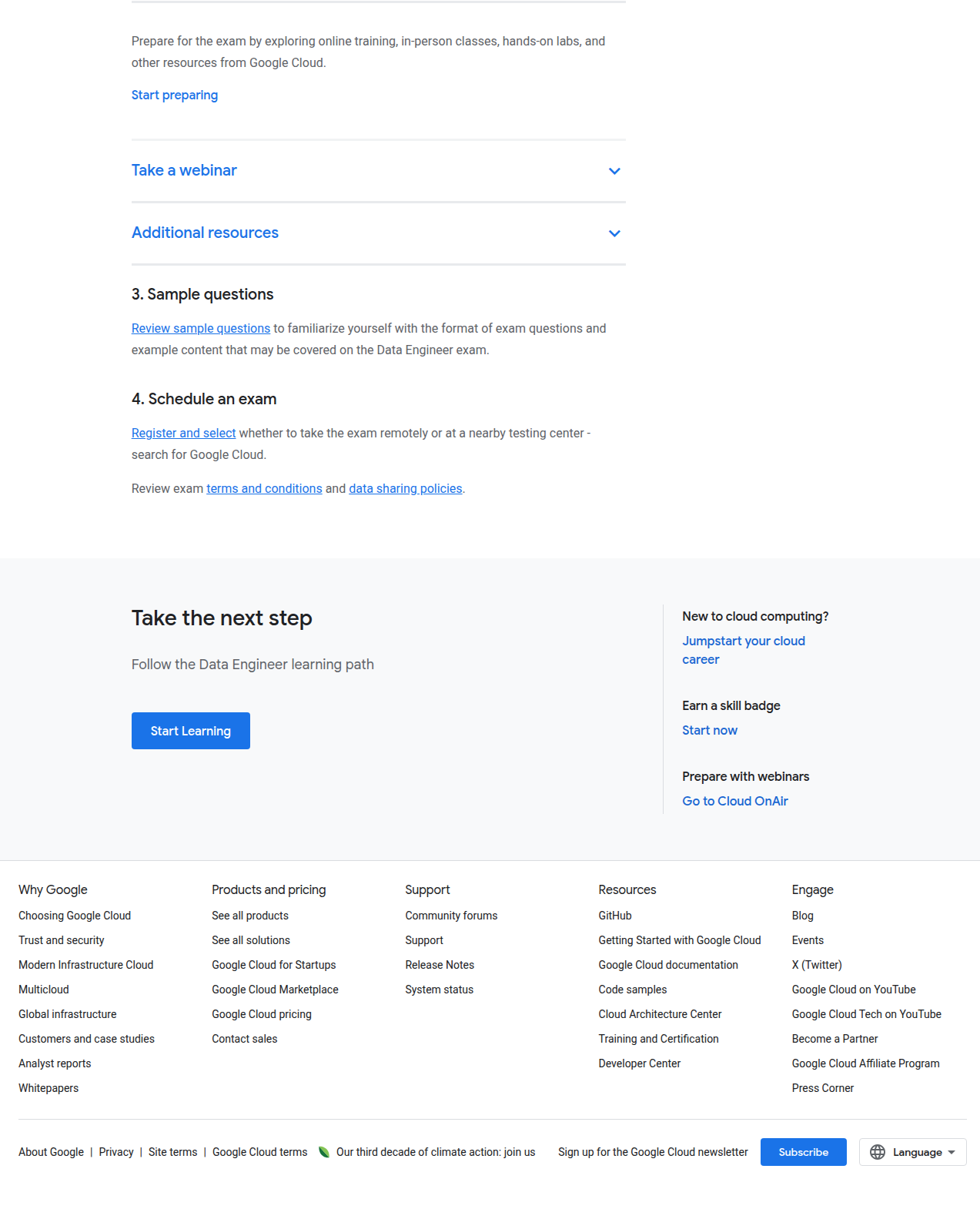
Google also points learners toward the Data Engineer learning path.
That matters because it shows the certification is connected to a broader skill path rather than a one-off badge. If you are trying to build long-term cloud credibility, a certification with an obvious next step is more valuable than a dead-end exam.
Practical ROI for IT careers
Here is the honest value proposition.
1. Stronger cloud credibility
A Google Cloud Professional-level certification still carries weight, especially if your current role is adjacent to cloud infrastructure, support, or operations.
2. Better AI-adjacent understanding
Even if you are not building models, you will better understand the data layer that supports AI systems, analytics platforms, and automation pipelines.
3. Better conversations with data teams
If your job touches data access, device telemetry, endpoint analytics, or reporting, this credential makes you sound like someone who understands the platform instead of just the symptoms.
4. Good long-term positioning
For IT professionals who want to move toward cloud operations, platform engineering, or data-support responsibilities, this is a stronger signal than a beginner badge.
Who should take it
This certification is a good fit if you are:
- a sysadmin who wants to move closer to cloud data platforms
- a desktop engineer who supports analytics, reporting, or AI-adjacent workflows
- an IT support lead who needs to understand how data moves through modern systems
- a cloud-adjacent professional who wants a respected Google Cloud credential
- someone preparing for more advanced data engineering or platform roles
Who should skip it
It is probably not the best first step if you want:
- a quick beginner AI badge
- a lightweight intro credential for non-technical stakeholders
- a hands-on lab badge focused on one narrow Microsoft workflow
- a fast résumé line with minimal study time
If your goal is basic AI literacy, something like a short awareness certificate may be a better fit. If your goal is practical platform credibility, this one is more serious.
How it compares with other AI-related cert paths
| Certification | Strength | Weakness | Best use case |
|---|---|---|---|
| Google Cloud Professional Data Engineer | Strong cloud-data depth, useful for AI-adjacent systems | Not an entry-level AI cert | IT pros supporting cloud data platforms |
| Google Cloud Generative AI Leader | Fast AI literacy and product awareness | Limited technical depth | Leaders and IT generalists needing AI context |
| AWS Certified AI Practitioner | Broad AI awareness with AWS brand value | More foundational than hands-on | AWS-focused practitioners entering AI concepts |
| Microsoft Applied Skills AI badges | Very practical and task-focused | Narrower scope | Microsoft-first engineers proving execution |
| Coursera AI certificates | Good for structured learning and portfolio work | Slower to complete | Learners who want projects and depth |
For most IT professionals, the Google Cloud Professional Data Engineer sits at a more technical and more durable level than the lighter AI awareness credentials.
Final recommendation
The Google Cloud Professional Data Engineer certification is worth it if you want a respected cloud credential that also gives you practical leverage in AI-adjacent work.
It will not turn you into an ML engineer overnight. That is not the point.
Its value is simpler:
- you learn how modern data platforms are designed
- you gain credibility around secure and reliable data workflows
- you position yourself for cloud, analytics, and AI-support conversations
- you earn a serious Google Cloud credential with lasting signal
For sysadmins, desktop engineers, and IT support professionals who want to move closer to the data side of AI, that is a solid return.