Microsoft Certified: Fabric Data Engineer Associate (DP-700): Worth It for AI-Focused IT Pros?
AI applications depend on data pipelines that can be loaded, transformed, secured, monitored, and explained. Microsoft Certified: Fabric Data Engineer Associate validates that operational data-engineering layer through exam DP-700: Implementing Data Engineering Solutions Using Microsoft Fabric.
This is a single-certification review. It is aimed at IT professionals who support Microsoft data estates, analytics platforms, or AI projects—not people looking for a general list of AI credentials.
Quick verdict
| Category | Verdict |
|---|---|
| Provider | Microsoft |
| Credential | Microsoft Certified: Fabric Data Engineer Associate |
| Exam | DP-700: Implementing Data Engineering Solutions Using Microsoft Fabric |
| Level | Intermediate |
| Best fit | Data, cloud, platform, and IT operations professionals supporting Fabric |
| AI relevance | Strong foundation: governed, reliable data for AI and analytics |
| Main limitation | It is not a model-development or generative-AI certification |
| My take | Worth it when Microsoft Fabric is part of your organization’s data roadmap |
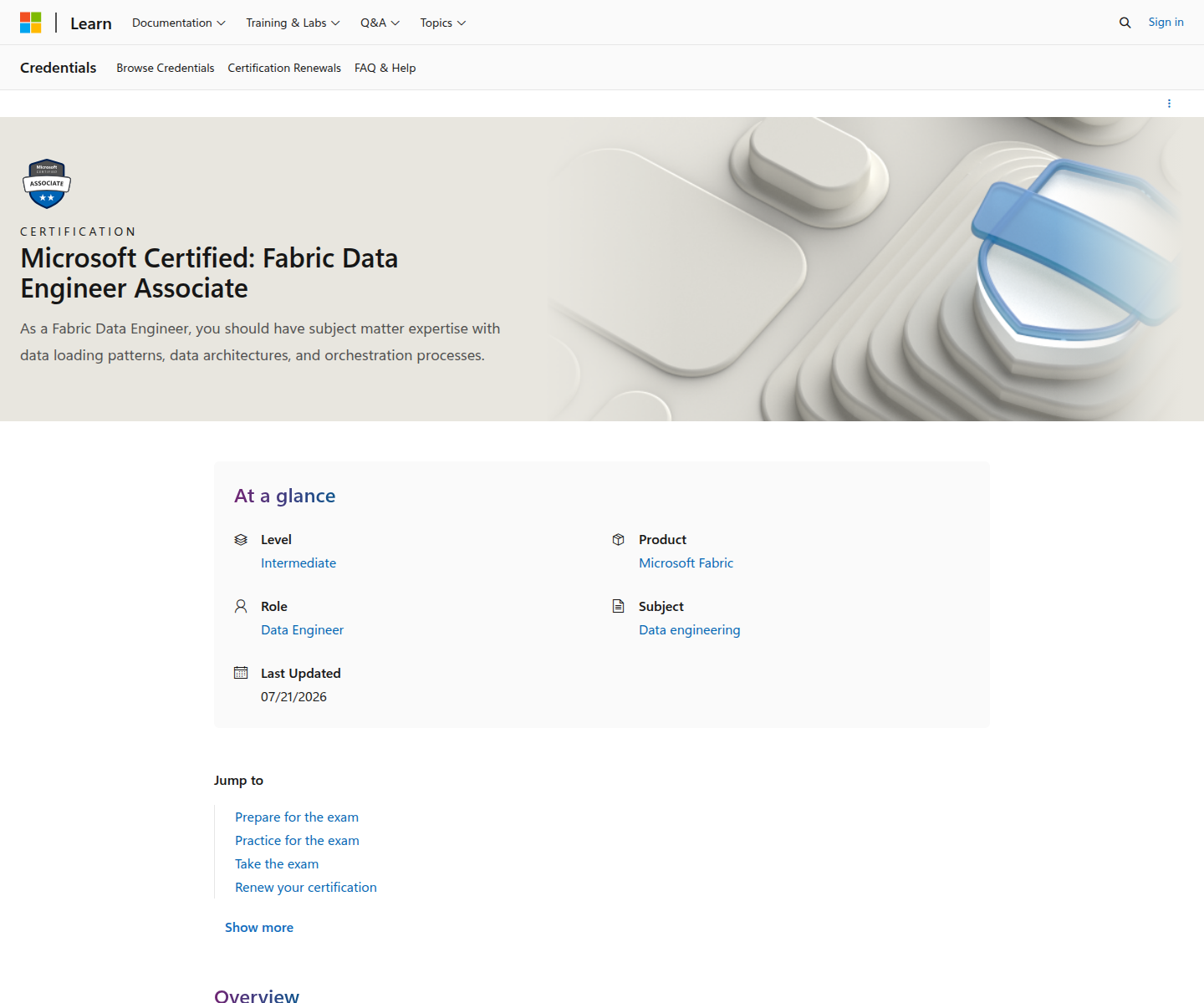
Official pages: certification overview, DP-700 study guide, and official training course.
What DP-700 validates
Microsoft describes the role as implementing data-loading patterns, data architectures, and orchestration processes in Fabric. The work includes ingesting and transforming data, securing and managing an analytics solution, and monitoring and optimizing it.
Candidates should be comfortable manipulating and transforming data with SQL, PySpark, or Kusto Query Language (KQL). That is a meaningful distinction from a dashboard-only credential: the target is the engineering system behind analytics and downstream AI workloads.
The certification is especially relevant to an administrator, cloud engineer, data engineer, or platform engineer who must turn a Fabric environment into a repeatable service rather than a collection of experiments.
Current exam scope
Microsoft’s current study guide groups the exam into three areas:
- Implement data loading patterns (30–35%): choose and implement ingestion methods, dataflows, pipelines, notebooks, shortcuts, mirroring, and incremental loading patterns.
- Implement a data-analytics solution (45–50%): work with lakehouses, warehouses, event-oriented data, transformations, schemas, SQL, PySpark, KQL, and orchestration.
- Implement data security, management, and monitoring (15–20%): apply access controls, governance, monitoring, deployment practices, and optimization.
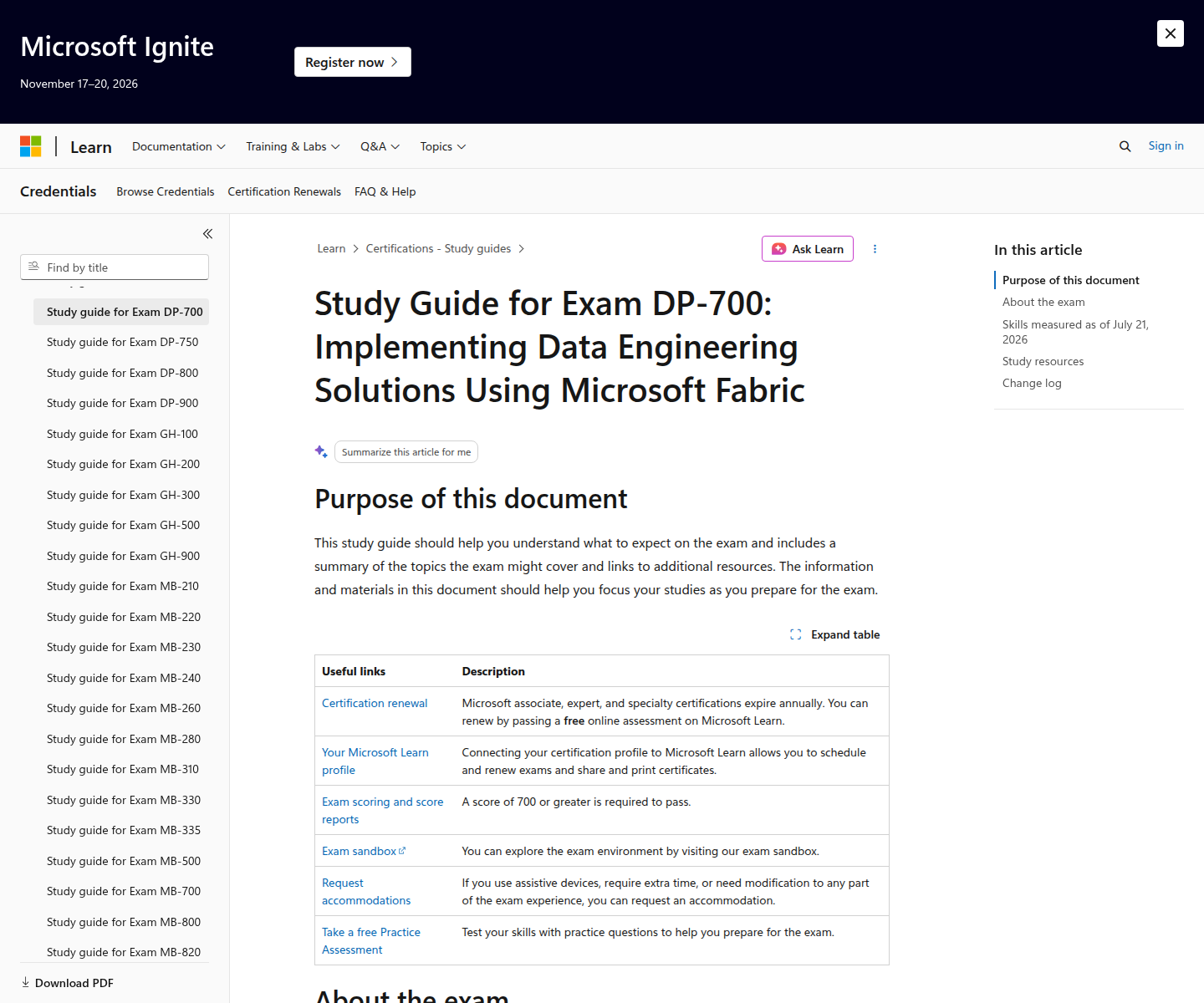
The study guide is the authority for the version of the exam you schedule. Microsoft lists a passing score of 700 or greater for its certification exams. Check the live study guide before booking because skills measured and product behavior can change.
Why a data-engineering credential matters to AI teams
DP-700 does not teach neural-network training, prompt design, or model evaluation. Its AI value is practical and upstream:
- Retrieval and analytics need usable data. Ingestion and transformation determine whether an AI application receives complete, timely context.
- Governance is part of AI safety. Permissions, data classification, and controlled workspaces reduce the chance of exposing sensitive business data through an AI experience.
- Pipelines make AI repeatable. Orchestration, monitoring, and incremental loads help teams move from a one-off demo to an operating workload.
- Performance affects user experience. Storage choices, query behavior, and workload optimization influence latency and cost for AI-assisted reporting.
For an endpoint or systems professional moving toward AI operations, the credential can provide a useful bridge: it explains how the data platform behaves without pretending to be a model-engineering qualification.
The practical assessment challenge
The hardest preparation task is building and troubleshooting a small Fabric environment. Memorizing names is less useful than practicing decisions such as:
- when to use a pipeline, dataflow, notebook, shortcut, or mirrored source;
- how to load new data without duplicating existing records;
- how to transform data with SQL or PySpark and validate the result;
- how lakehouses and warehouses serve different workload needs;
- how permissions and governance affect data access; and
- how to monitor failures, refreshes, capacity, and performance.
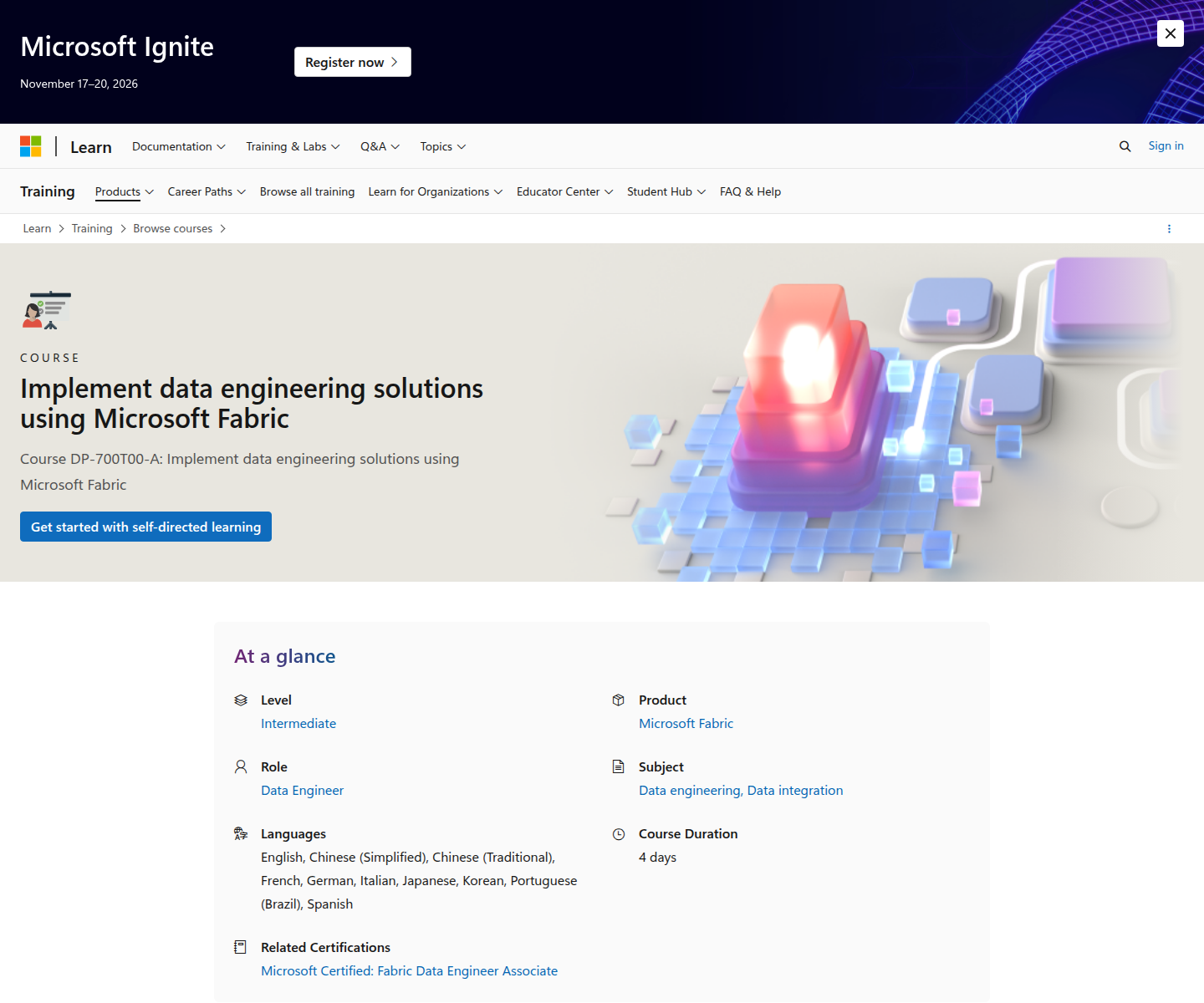
Microsoft’s related instructor-led course is listed as four days and is marked intermediate. Self-paced study can be cheaper, but it should include hands-on labs and a small portfolio project. A credible project might ingest service or device data into a lakehouse, transform it, secure it, and expose a monitored analytics workflow that an AI assistant could safely use.
Preparation plan for IT professionals
1. Establish the data basics
Review relational concepts, file formats, partitions, schemas, joins, and incremental loading. If SQL is rusty, fix that before spending heavily on exam questions.
2. Build one end-to-end Fabric workflow
Use a sample source and practice ingestion, transformation, storage, orchestration, and monitoring. Repeat the workflow after deliberately introducing a schema or permission problem.
3. Add security and operational thinking
Document who can access each workspace and item, what data is sensitive, how a deployment is promoted, and which signal tells you that a refresh has failed. This is where an IT operations background becomes an advantage.
4. Finish with the study guide and practice assessment
Use Microsoft’s current skills outline, exam sandbox, and free practice assessment as checkpoints. Do not treat third-party question dumps as a substitute for real platform work.
Career ROI: who should take it?
Good fit: professionals supporting Microsoft Fabric, Power BI, Azure data services, enterprise analytics, data governance, or AI platform operations.
Potentially poor fit: an endpoint technician with no access to data platforms, a software engineer seeking a pure model-development credential, or someone whose employer is committed to a different cloud and has no Fabric plans.
The credential is most valuable when paired with evidence: a documented pipeline, a governed lakehouse or warehouse, and the ability to explain monitoring and failure recovery. On its own, it signals platform direction; hands-on work proves operational ability.
Bottom line
Microsoft Certified: Fabric Data Engineer Associate is a credible AI-adjacent certification because AI systems are only as dependable as the data supply chain beneath them. It is not a shortcut to becoming an AI engineer, and it will not replace model, application, or security credentials. For Microsoft-heavy IT professionals who will own data ingestion, orchestration, governance, or reliability around AI workloads, DP-700 is a focused and defensible investment.
Recheck Microsoft’s live certification page and study guide before scheduling; those pages control current exam details.