
Microsoft Certified: Azure Data Scientist Associate (DP-100) — Worth It for IT Pros?
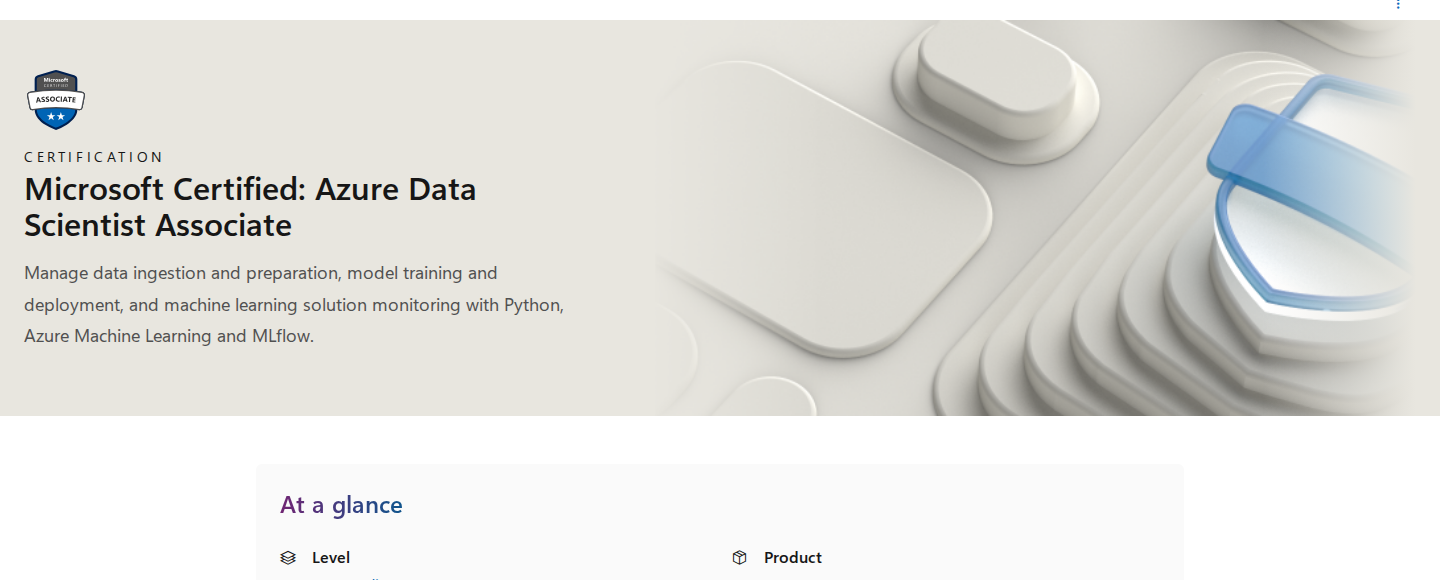
The Microsoft Certified: Azure Data Scientist Associate certification used to be one of the clearest Microsoft signals for people who wanted to prove they could manage Azure-based machine learning work.
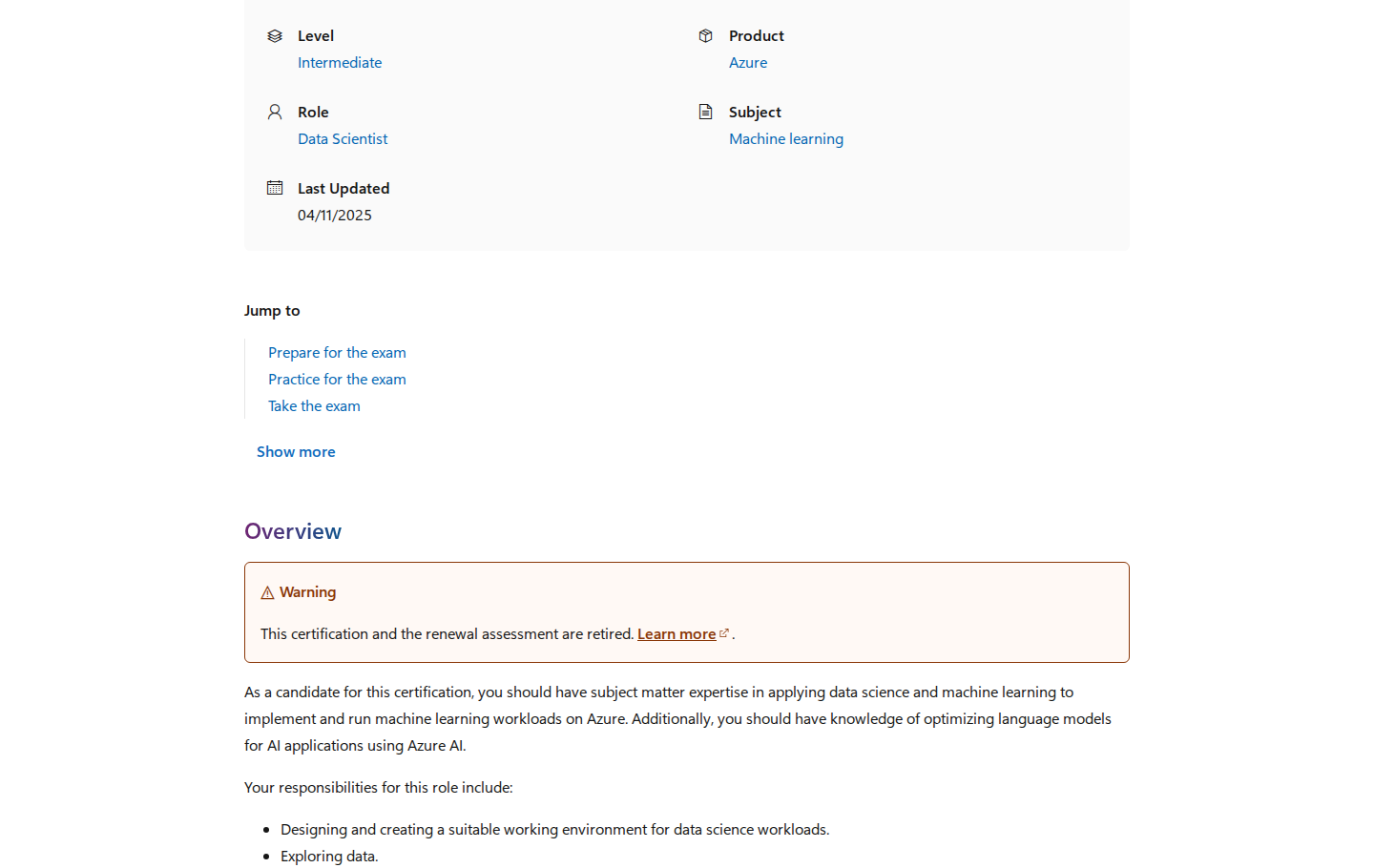
As of the current Microsoft Learn page, that certification is now retired. That changes the recommendation, but it does not make the credential irrelevant.
If you already hold it, DP-100 still tells employers something useful: you understand Azure Machine Learning, MLflow, pipeline design, deployment, and monitoring. If you are deciding whether to chase it today, the answer is different.
Quick verdict
| Category | Verdict |
|---|---|
| Best for | Existing Microsoft/Azure practitioners who already earned it |
| Provider | Microsoft Learn |
| Credential type | Role-based certification |
| Current status | Retired |
| Practical ROI today | Low for new candidates, moderate as a legacy resume signal |
| Biggest value | Azure ML, MLflow, model deployment, and monitoring vocabulary |
| Biggest risk | You can no longer treat it as a current hiring differentiator |
| My recommendation | Do not target this as a new goal; use it only if you already have it or need legacy context |
Official certification page: https://learn.microsoft.com/en-us/credentials/certifications/azure-data-scientist/
Why this certification still matters
For IT professionals, the value of a cert is not just the badge. It is the mapping between the badge and the work.
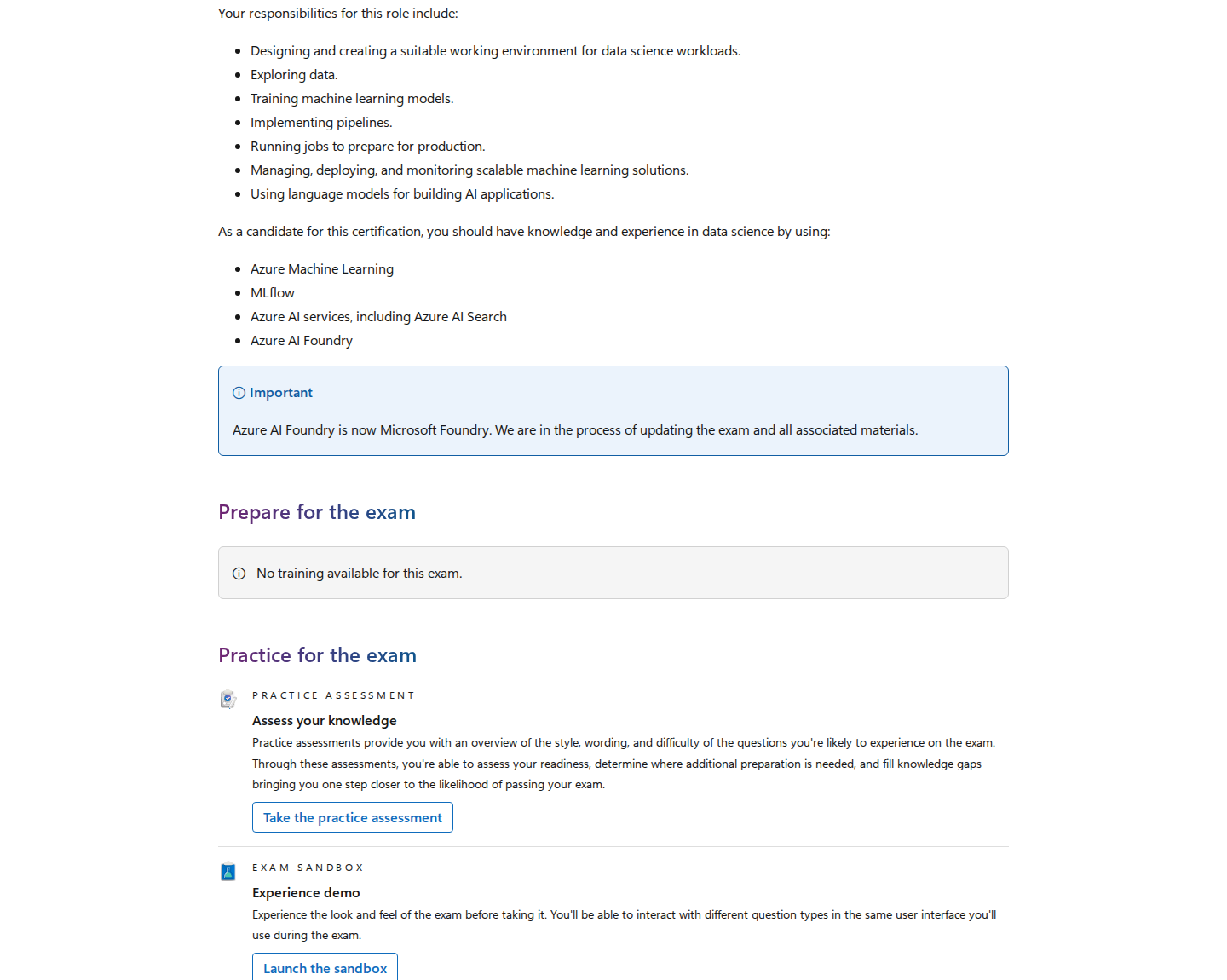
DP-100 maps to real platform work:
- setting up a working environment for data science workloads
- exploring data and running experiments
- training machine learning models
- implementing pipelines
- deploying and monitoring machine learning solutions
- using language models for AI applications in Azure
That is why the certification had appeal beyond pure data science teams. It spoke to the operational side of machine learning, not just theory.
What Microsoft says the certification covered
Microsoft’s page describes the certification as focused on:
managing data ingestion and preparation, model training and deployment, and machine learning solution monitoring with Python, Azure Machine Learning and MLflow.
The page also lists the role as Data Scientist, the level as Intermediate, and the product as Azure.
That combination makes the cert especially relevant if your work touches any of these areas:
- Azure Machine Learning workspaces
- MLflow tracking and lifecycle management
- pipeline automation
- model deployment and monitoring
- AI application support that depends on Azure services
The page also notes that Azure AI Foundry is now Microsoft Foundry, which is another sign that Microsoft is actively shifting the surrounding product surface.
The exam experience matters more than the badge now
One reason DP-100 still deserves a write-up is that the exam design reveals Microsoft’s intent.
The page says this exam is:
- proctored
- may include interactive components
- available with a practice assessment
- includes an exam sandbox so you can preview the interface
- offers prep videos
That is a useful signal for anyone moving into Azure ML work: Microsoft expected candidates to do more than memorize definitions.
What the exam assessed
Microsoft lists these assessed areas:
- Design and prepare a machine learning solution
- Explore data and run experiments
- Train and deploy models
- Optimize language models for AI applications
That is a fairly practical split. It is not just “what is machine learning?” It is “can you operationalize it on Azure?”
ROI for IT professionals in 2026
If you are a desktop engineer, sysadmin, security engineer, or cloud operator, DP-100 is not a first-choice target in 2026.
Why?
- It is retired, so it no longer carries current exam-market momentum.
- Microsoft has newer AI branding and adjacent paths.
- Hiring managers usually value current Azure AI and Copilot-oriented credentials more today.
But if you already have it, the credential still helps in these situations:
- legacy resume screening
- internal promotion conversations
- Azure/ML support roles
- consulting engagements where older Microsoft certs still matter
- showing a long-running investment in Azure AI/ML
In other words: the badge still has narrative value, but it is no longer a good fresh investment.
Should you pursue it now?
For most IT pros: no.
If you are choosing a Microsoft AI path today, you are usually better off with a current Azure AI or Applied Skills credential that aligns with active product surfaces.
Choose DP-100 only if:
- you already passed it and want to understand its relevance
- you need legacy Azure ML context for an existing role
- your employer explicitly values the historical credential
Final take
Microsoft Certified: Azure Data Scientist Associate was a solid credential for proving Azure ML capability, but its retirement changes the ROI calculation.
If you already earned it, keep it on your resume and frame it as Azure ML operations experience. If you have not earned it yet, do not chase it now.
For 2026, the smarter move is to focus on Microsoft’s current AI certifications and applied skills paths instead.