Microsoft Certified: Operationalizing Machine Learning and Generative AI Solutions (AI-300): Worth It for IT Pros?
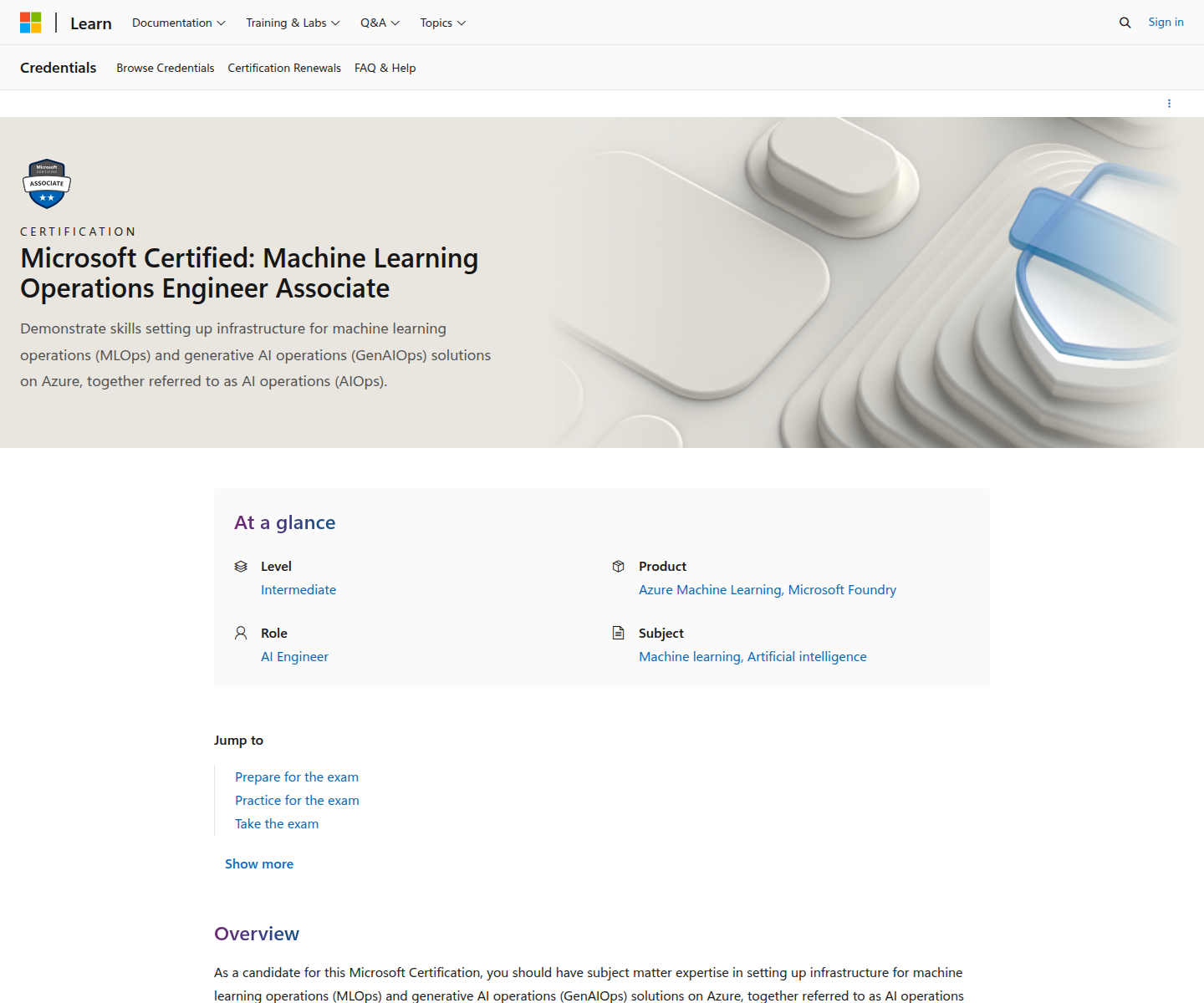
Microsoft’s Operationalizing Machine Learning and Generative AI Solutions certification is built around Exam AI-300. It targets professionals who put machine-learning and generative-AI systems into operation: infrastructure, lifecycle management, evaluation, observability, and performance optimization.
This is not an entry-level AI literacy badge and not a general Azure administration exam. The practical question is whether your role is moving toward MLOps, GenAIOps, model-serving platforms, or the operational side of Microsoft Foundry.
Quick verdict
| Category | Details |
|---|---|
| Provider | Microsoft |
| Certification | Operationalizing Machine Learning and Generative AI Solutions |
| Exam | AI-300 |
| Level | Advanced / specialist |
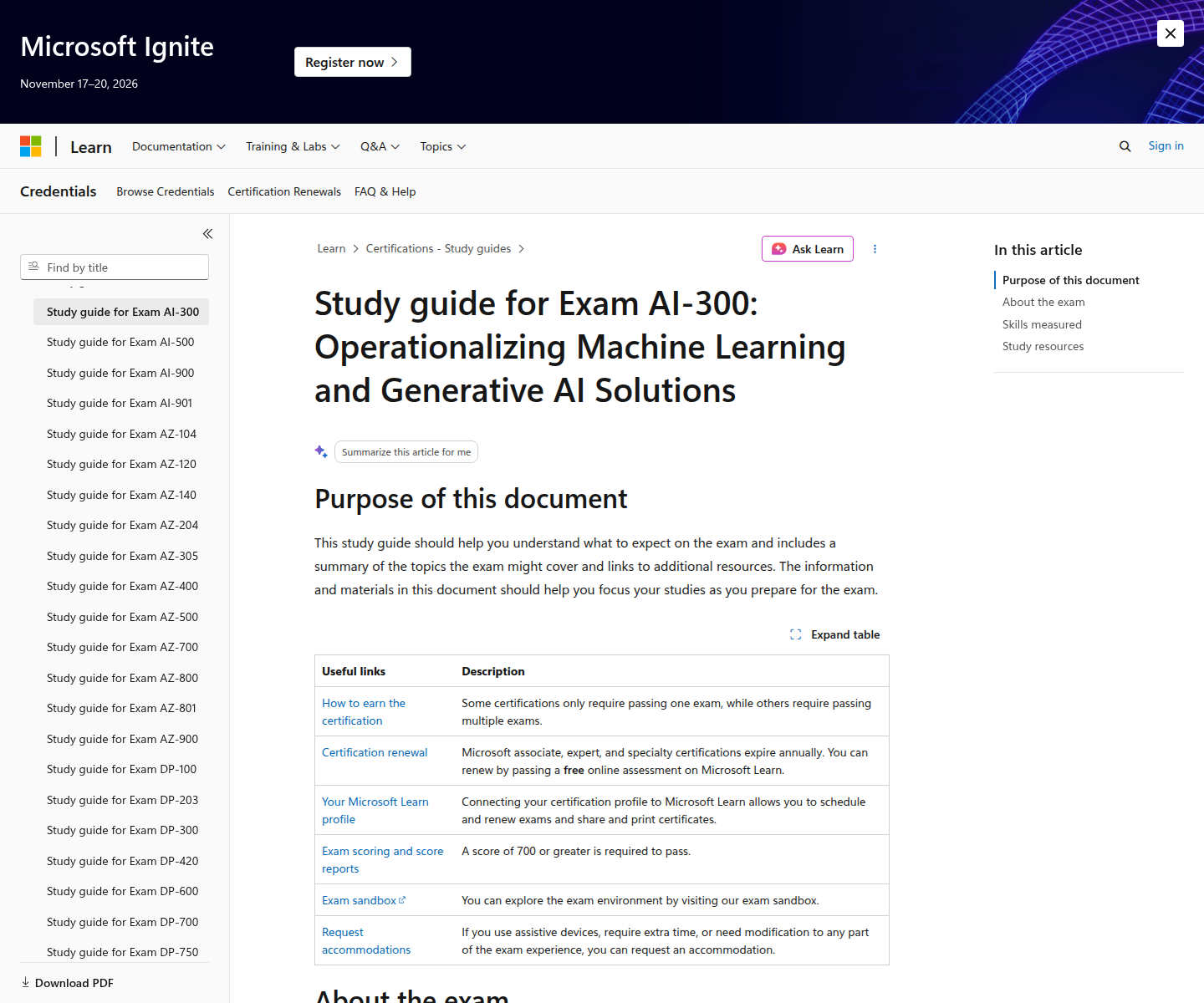
| Passing score | 700 or greater, according to Microsoft’s study guide |
| Main platforms | Azure Machine Learning, Microsoft Foundry, GitHub Actions, Bicep, Azure CLI |
| Core areas | MLOps infrastructure, ML lifecycle, GenAIOps, AI quality, observability, optimization |
| Best fit | MLOps engineers, ML platform engineers, GenAIOps engineers, and senior cloud practitioners |
| ROI | Strong for Microsoft AI platform teams; weak as a first certification for general IT support |
Bottom line: AI-300 is a credible direction for an experienced engineer who already understands cloud operations and wants to own the path from model or agent development to a monitored production service. It is a poor shortcut for someone who has not yet worked with Azure, Python, deployment automation, and basic data-science workflows.
What Microsoft says the candidate should know
Microsoft’s official audience profile expects subject-matter expertise in setting up infrastructure for machine-learning operations (MLOps) and generative-AI operations (GenAIOps) on Azure. The profile specifically calls out training, optimizing, deploying, and maintaining traditional machine-learning models with Azure Machine Learning, plus deploying, evaluating, monitoring, and optimizing generative-AI applications and agents with Microsoft Foundry.
The expected foundation includes Python, entry-level DevOps practices, GitHub Actions, command-line interfaces, Bicep, and Azure CLI. That combination tells you what kind of certification this is: not just model theory, and not just infrastructure, but the handoff between data science, application engineering, and platform operations.
The five assessed skill areas
Microsoft’s study guide gives the following weighting ranges:
- Design and implement an MLOps infrastructure — 15–20%
- Implement machine-learning model lifecycle and operations — 25–30%
- Design and implement a GenAIOps infrastructure — 20–25%
- Implement generative-AI quality assurance and observability — 10–15%
- Optimize generative-AI systems and model performance — 10–15%
The weighting is useful for planning. Model lifecycle and operations is the largest area, while GenAIOps infrastructure is close behind. Quality, observability, and optimization are not side topics; together they distinguish operating an AI system from demonstrating a prototype.
Why this matters to IT professionals
AI production is an operations problem
A successful notebook or proof of concept does not establish reliable service ownership. Someone still has to create repeatable infrastructure, manage deployments, track versions, monitor quality, investigate regressions, and control cost. AI-300 is aimed at that operational layer.
Existing DevOps skills transfer, but do not finish the job
Infrastructure as code, CI/CD, monitoring, change control, and incident response remain valuable. But AI systems add evaluation datasets, prompt and model versions, grounding behavior, token or inference cost, drift, and safety signals. Preparation should connect familiar platform practices to those AI-specific failure modes.
Microsoft Foundry makes the scope current
The official profile includes Microsoft Foundry alongside Azure Machine Learning. That means candidates should expect generative-AI applications and agents, not only traditional supervised-learning pipelines. Review evaluation and observability as operating concerns rather than treating them as optional application features.
What AI-300 does not prove
Passing AI-300 would not, by itself, prove that you can:
- design every Azure landing zone or enterprise network;
- train a foundation model from scratch;
- write production Python without assistance;
- run a complete security and compliance program; or
- replace hands-on experience with Azure Machine Learning and Foundry.
The credential validates a defined operational skill set. Employers should still look for deployment evidence, runbooks, incident examples, and the ability to explain trade-offs under real constraints.
A practical preparation plan
1. Build the Azure substrate first
Be comfortable with identities, resource organization, networking basics, storage, compute, logging, permissions, and cost controls. If ordinary Azure resource management is still unfamiliar, AI-300 is premature.
2. Create one repeatable ML lifecycle
Build a small project that moves from data and training to registration, deployment, testing, monitoring, and rollback. Keep the infrastructure and deployment steps in source control. The goal is to understand where artifacts, metadata, and approvals live.
3. Add a GenAIOps loop
Use a small Foundry application or agent and define an evaluation set. Change a prompt, model, grounding source, or tool connection deliberately, then compare quality, latency, cost, and failure behavior. Treat the result like a release decision.
4. Automate with the tools Microsoft names
Practice GitHub Actions, Bicep, and Azure CLI rather than relying exclusively on portal clicks. Write down the idempotency, secret handling, environment promotion, and rollback behavior of each deployment.
5. Practice operational diagnosis
Prepare scenarios involving a model-quality regression, failed deployment, rising latency, unexpected token cost, missing telemetry, data-access failure, and an agent that produces an unsafe or ungrounded answer. For each, identify the signal, likely causes, safe first action, and validation step.

Who should take it?
Strong fit: MLOps engineers, ML platform engineers, cloud engineers moving into AI platform work, and senior DevOps or SRE practitioners who already support model or agent workloads.
Possible fit: Data scientists who want to own production operations, provided they are willing to learn infrastructure as code, CI/CD, identity, and observability.
Weak fit: Desktop engineers, help-desk professionals, and junior administrators looking for their first AI credential. A fundamentals or role-based foundation credential will usually provide better near-term return before a specialist MLOps and GenAIOps exam.
Final verdict
AI-300 is worth considering when your job includes operationalizing AI on Azure. Its value comes from the combination of MLOps lifecycle work, GenAIOps infrastructure, quality assurance, observability, and performance optimization. It is much less useful as a general-purpose AI credential or as a substitute for foundational cloud experience.
Before booking, compare the current Microsoft exam page and study guide with your target role. Microsoft can revise objectives, platform names, and exam details; use the live provider documentation as the source of truth.