
Microsoft Azure Security Engineer Associate (AZ-500) Retired: Is the Credential Still Worth Knowing?
Short answer: do not start AZ-500 as a new certification path. Microsoft says the Azure Security Engineer Associate certification and related exam were retired on August 31, 2026. The underlying skills still matter, but a new candidate should redirect that study time toward a current Microsoft security credential or a role-specific Azure security lab.
What AZ-500 covered
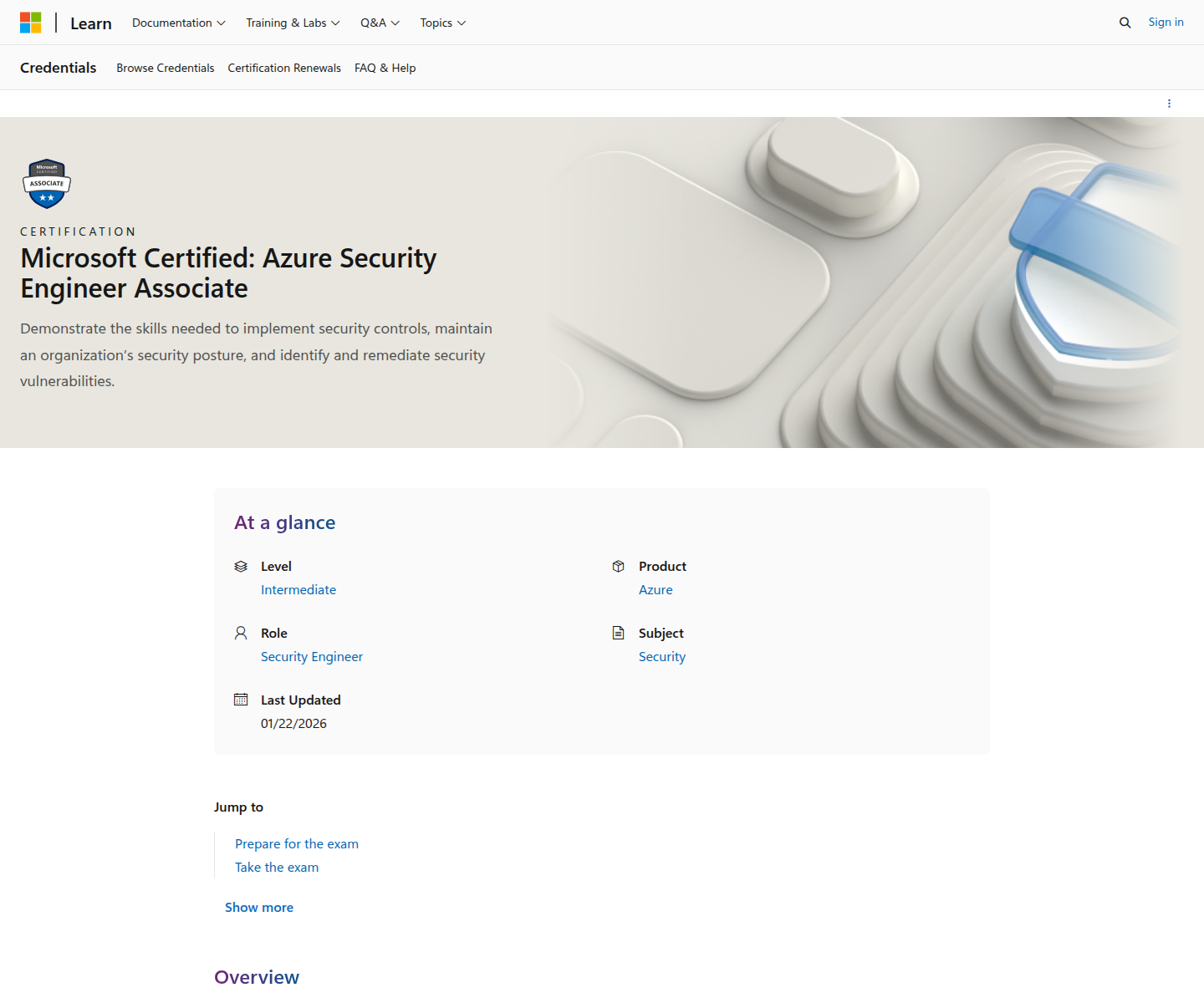
The Azure Security Engineer role was operational rather than purely theoretical. Microsoft described it as implementing, managing, and monitoring security for Azure, multicloud, and hybrid resources. The work included security components and configurations, Microsoft Defender for Cloud, identity and access controls, platform protection, data security, and security operations.
That makes AZ-500 highly relevant to IT professionals supporting AI platforms. AI services still depend on identities, private networking, secrets, logging, workload protection, and data controls. A model endpoint is not secure merely because the model is new; it inherits the security posture of the surrounding cloud environment.
The important distinction is between skill relevance and credential availability. AZ-500 remains useful as a vocabulary for reading older job descriptions, runbooks, and internal training plans. It is no longer a sensible exam target after the retirement date.
The retirement notice changes the ROI calculation
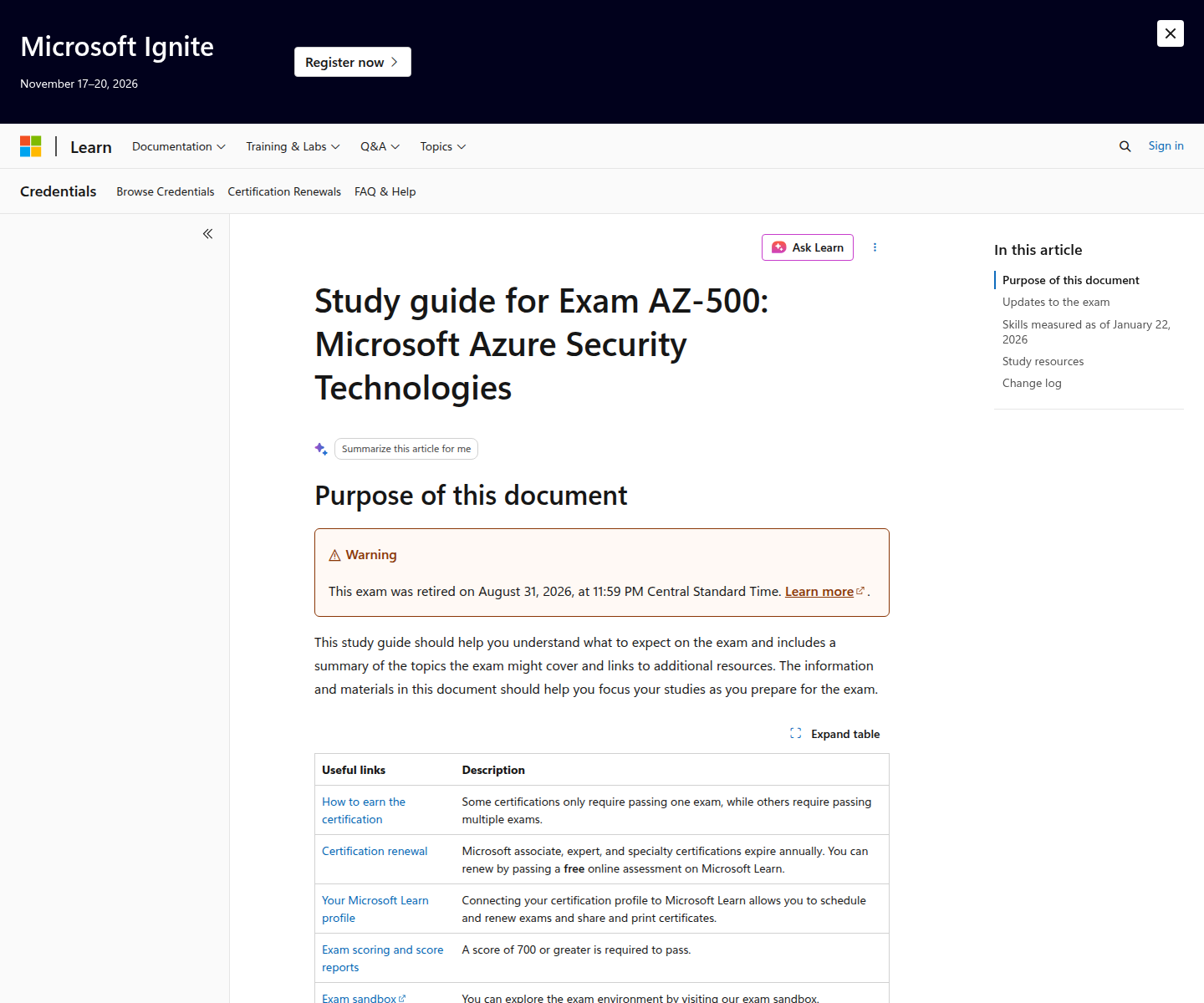
Microsoft’s study guide states that Exam AZ-500 was retired on August 31, 2026, at 11:59 PM Central Standard Time. The certification page also says candidates can no longer earn or renew the certification after that date.
That creates three practical cases:
| Situation | Recommendation |
|---|---|
| You have not started | Skip the AZ-500 exam path and choose a current security route. |
| You studied most of the blueprint before retirement | Keep the notes as Azure security fundamentals, but do not present an unearned AZ-500 credential on a résumé. |
| You already earned AZ-500 | Preserve the transcript and verify its status in your Microsoft Learn profile; the retirement does not erase the experience represented by the work. |
The retirement date is not a minor footnote. It is the first fact a career article, study plan, or manager conversation should surface.
Why the knowledge still helps with AI infrastructure
Azure AI and machine-learning environments create security work across several layers:
- Identity: managed identities, role assignments, service principals, and least privilege for data and model access.
- Network exposure: private endpoints, segmentation, ingress controls, and controlled paths between applications, data stores, and AI services.
- Data protection: encryption, sensitive-data controls, key management, and separation between development, test, and production data.
- Posture management: Defender for Cloud recommendations, vulnerability findings, secure configuration baselines, and remediation evidence.
- Operations: alert triage, logging, incident response, and proof that an AI workload is operating inside approved controls.
These are durable engineering tasks even when a particular exam is retired. For desktop engineers and sysadmins, the transferable value is the ability to connect endpoint identity, Entra permissions, hybrid networking, and cloud workload controls instead of treating AI as an isolated application.
A better path for a new candidate
Start with Microsoft’s current credentials catalog and select the credential that matches the work you will actually perform. A security operations role may justify a current security-operations credential; an Azure administrator may need stronger platform fundamentals first; an AI engineer may need an active AI implementation path plus hands-on identity and network controls.
Use the AZ-500 study guide as historical reference only. It can still help you build a lab around role-based access control, Defender for Cloud, private connectivity, policy, logging, and incident response. Label that work honestly as AZ-500-aligned Azure security practice, not as a current certification.
A useful replacement study project is an AI workload security runbook:
- Deploy a small test AI or data service with no public exposure by default.
- Use managed identity and document every required role assignment.
- Restrict network access with private connectivity or an explicit equivalent.
- Enable posture recommendations, diagnostic logs, and alert routing.
- Test an intentionally over-permissive configuration and record the remediation evidence.
- Write rollback and incident-response steps that another administrator can execute.
That project gives an interviewer evidence of judgment, not just a retired exam name.
Verdict
AZ-500 is not worth pursuing as a new certification in September 2026 because Microsoft retired the exam and certification on August 31, 2026. Its subject matter remains valuable for Azure, hybrid, security, and AI-platform operations, so existing holders and teams with legacy material should keep the technical knowledge. New candidates should convert the blueprint into hands-on security practice and pair it with an active credential.