Microsoft Certified: Azure Network Engineer Associate (AZ-700): Worth It for AI-Focused IT Pros?
AI services are only as dependable as the network paths, private endpoints, name resolution, routing, and security controls around them. Microsoft Certified: Azure Network Engineer Associate validates Azure networking rather than model development, but that makes it relevant to IT professionals who will operate the connectivity layer for AI applications.
Quick verdict
| Category | Details |
|---|---|
| Provider | Microsoft |
| Certification | Azure Network Engineer Associate |
| Exam | AZ-700: Designing and Implementing Microsoft Azure Networking Solutions |
| Level | Associate / intermediate |
| Core domains | Core infrastructure, connectivity, application delivery, private access, and network security |
| Best fit | Cloud engineers, network engineers, sysadmins, and IT pros supporting Azure workloads |
| AI relevance | Strong infrastructure-adjacent credential; not an AI or machine-learning certification |
Bottom line: AZ-700 is worth considering when your AI work involves private Azure services, hybrid connectivity, traffic management, or network security. It is a poor substitute for an AI engineering credential if your target role is building models, RAG systems, or agents.
What Microsoft says the certification covers
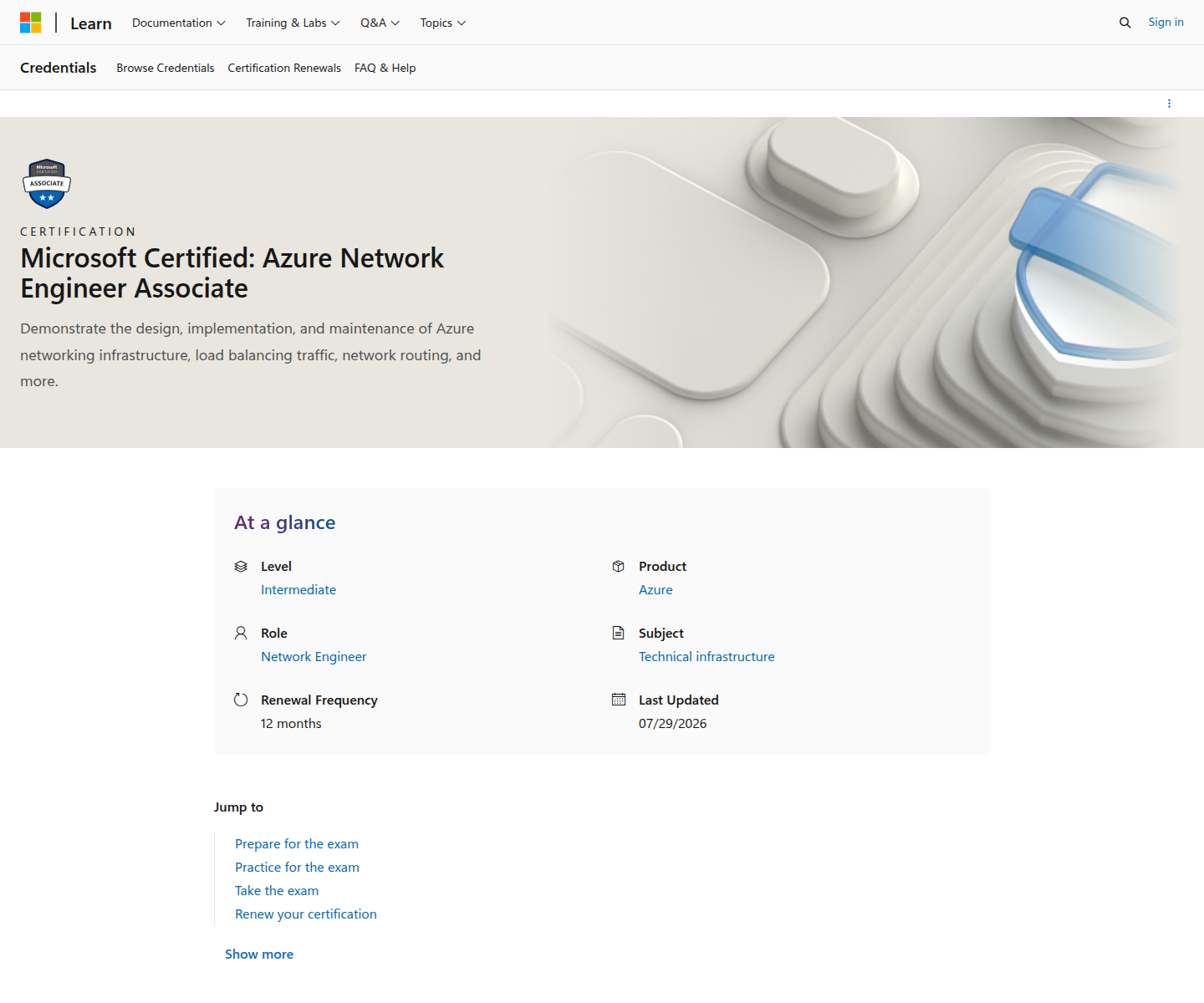
Microsoft describes the role as planning, implementing, and managing Azure networking solutions, with responsibility for performance, resiliency, scale, security, monitoring, and connectivity troubleshooting. The certification page identifies five assessed areas:
- Design and implement core networking infrastructure.
- Design, implement, and manage connectivity services.
- Design and implement application delivery services.
- Design and implement private access to Azure services.
- Design and implement Azure network security services.
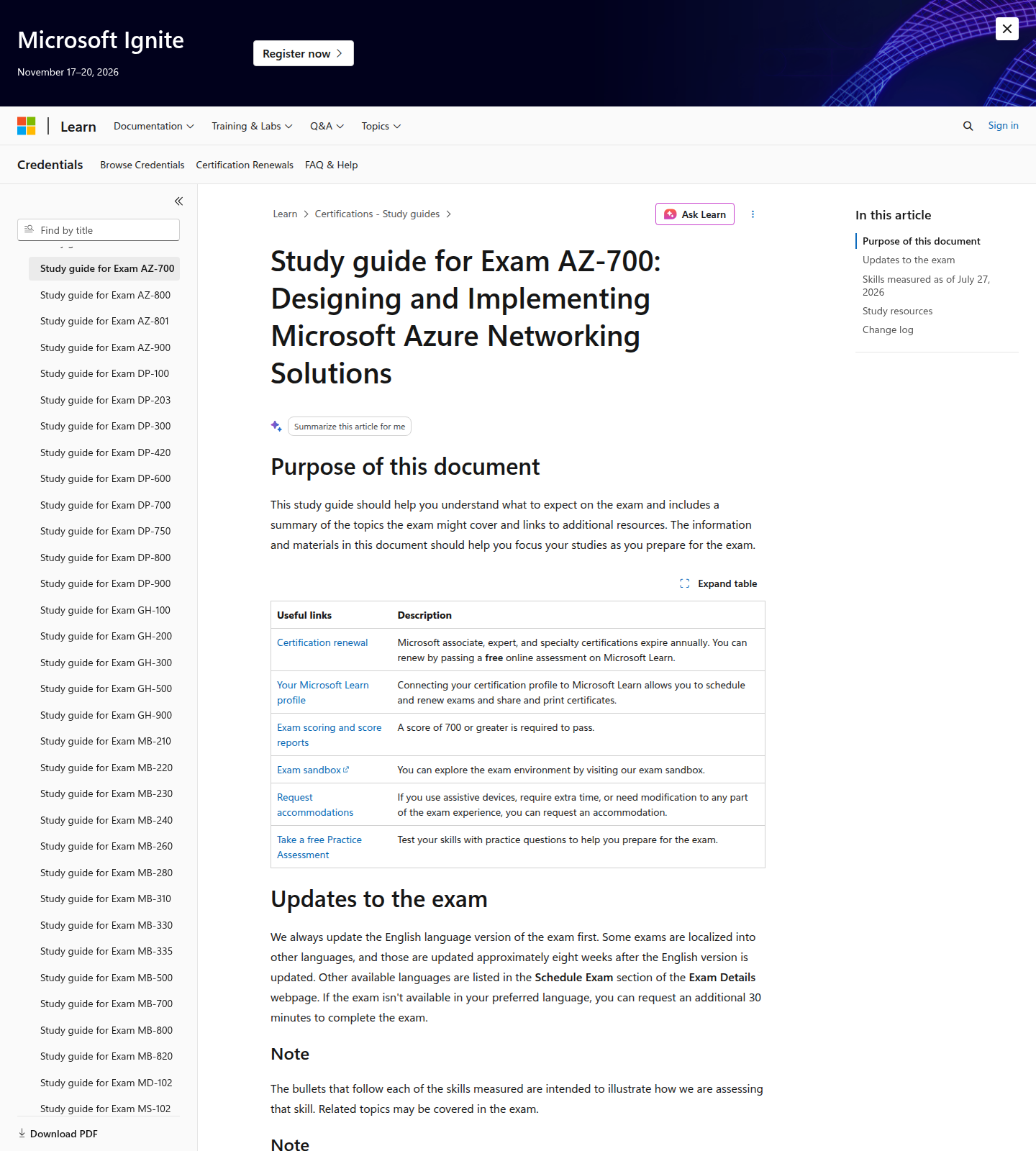
The current AZ-700 study guide weights those domains at 25–30%, 20–25%, 15–20%, 10–15%, and 15–20%, respectively. The guide also expects networking fundamentals, Azure resource management experience, and familiarity with compute, storage, and networking resources.
Why networking matters in AI platform operations
Private access is an AI security boundary
An enterprise AI application may call Azure-hosted services, storage, databases, search indexes, or model endpoints. Private endpoints, virtual networks, DNS, and routing determine whether those calls stay inside intended trust boundaries. AZ-700 gives an IT professional a structured way to learn those controls instead of treating connectivity as a last-mile detail.
Latency and resiliency affect user experience
A slow assistant is not automatically a model problem. DNS resolution, routing, load balancing, firewall inspection, hybrid links, and regional design can all add delay or create intermittent failures. The certification’s focus on performance, resiliency, and traffic delivery maps directly to first-response troubleshooting for AI-backed applications.
Hybrid identity and connectivity remain common
Many organizations still connect on-premises networks to Azure. ExpressRoute, VPN, Virtual WAN, routing intent, and segmentation can become part of the path between an employee, an application, and an AI service. These are practical skills for sysadmins moving into cloud platform support.
Security needs network evidence
AI governance is not only a policy document. Network security groups, Azure Firewall, Web Application Firewall, private access, monitoring, and flow evidence help establish what can communicate with what. AZ-700 does not make someone a security architect, but it develops useful operational vocabulary and diagnostic habits.
What the badge does not prove
AZ-700 does not demonstrate that you can:
- Train, evaluate, or fine-tune a machine-learning model.
- Build a RAG pipeline, agent, or prompt orchestration layer.
- Design an AI data-governance program by itself.
- Operate production Kubernetes or GPU infrastructure without additional experience.
- Debug application code or model quality issues.
Treat it as an infrastructure credential. Pair it with a small Azure lab and an AI workload only to demonstrate the network boundary—not to imply that the certification assessed AI development.
A practical study plan for AI-adjacent IT work
- Start with the current AZ-700 study guide. Turn each measured domain into a checklist and record the percentage weighting.
- Build a controlled network lab. Use a separate subscription or approved sandbox, budget alerts, and a documented cleanup plan.
- Trace a private service path. Document virtual network, subnet, private endpoint, private DNS, route, firewall decision, and monitoring evidence.
- Test hybrid failure modes. Practice distinguishing DNS, route, NSG, firewall, VPN, and service-level failures.
- Add an AI-shaped workload. Connect a simple internal application to an approved Azure service, then verify that access is private, logged, and least-privileged.
- Keep an incident runbook. Capture commands, portal evidence, expected flows, and rollback steps; this is stronger interview evidence than the badge alone.
Who should take it—and who should skip it
AZ-700 is a sensible choice for network engineers, cloud administrators, sysadmins, and desktop or endpoint engineers whose organizations are moving AI services into Azure. It is especially relevant when the job description mentions private endpoints, hybrid networking, application delivery, Azure Firewall, DNS, or connectivity troubleshooting.
Skip it as your first choice if your goal is model development, data science, prompt engineering, or AI application coding. Choose a role-aligned AI or data credential instead, and build hands-on evidence. Also avoid treating AZ-700 as a general cloud introduction if you have no Azure fundamentals; learn the platform basics first.
Verdict
Microsoft Certified: Azure Network Engineer Associate is a credible infrastructure credential for IT professionals supporting Azure-based AI systems. Its value is the ability to design and troubleshoot the network conditions that make secure, private, resilient AI services usable. Its limits are equally clear: it is not proof of AI engineering skill.
Use the certification as one part of a portfolio that includes a network diagram, private-access lab, monitoring evidence, and a short incident runbook. That combination tells an employer what you can operate—not just what exam you passed.