IBM AI Product Manager Professional Certificate: Worth It for IT Pros?
If you are an IT pro, the phrase product manager can sound like a detour. But the reality is that more infrastructure, desktop, and platform teams are being asked to define AI use cases, prioritize automation requests, and decide when an internal AI tool is actually ready for rollout.
That is where the IBM AI Product Manager Professional Certificate fits in. It is not a coding-heavy AI engineering path. Instead, it teaches the strategy layer: product thinking, AI product roadmaps, responsible AI, commercialization, and generative AI basics.
For sysadmins, endpoint engineers, service desk leads, and internal tooling owners, that combination can be surprisingly useful.
Quick verdict
| Category | Verdict |
|---|---|
| Best for | IT pros moving toward AI program ownership, internal tooling, or automation leadership |
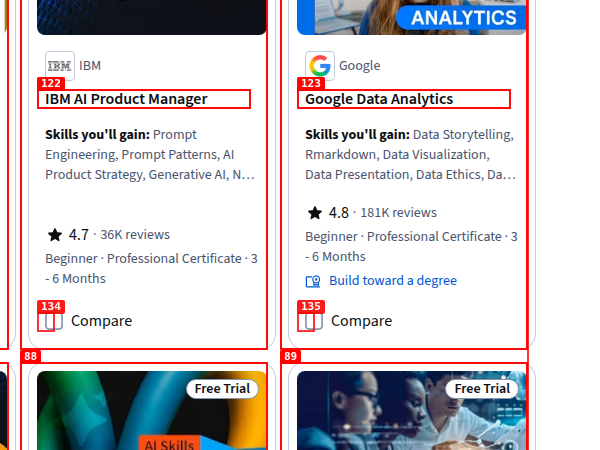
| Provider | IBM on Coursera |
| Format | Professional Certificate |
| Level | Beginner |
| Time estimate | 3 to 6 months |
| Rating / reviews | 4.7 stars from 36K reviews |
| Practical ROI | Strong if you need to evaluate, scope, and communicate AI initiatives rather than build models |
| Biggest weakness | Less useful than engineering certs if you want hands-on Python, MLOps, or model deployment |
| My recommendation | Good add-on for IT leaders, automation owners, and anyone bridging infrastructure and AI planning |
Official page: https://www.coursera.org/professional-certificates/ibm-ai-product-manager
Why this certificate stands out
A lot of AI credentials are either too technical for the average IT team or too shallow to be useful at work. This one sits in the middle.
Compared with other AI paths, the IBM AI Product Manager certificate is more about deciding what to build than building it yourself.
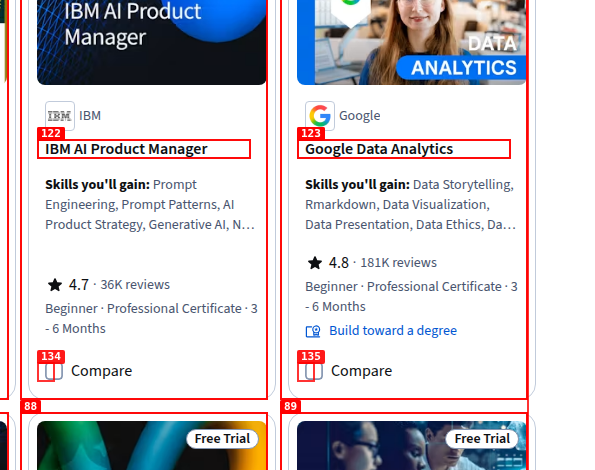
- Versus IBM AI Developer: that path is stronger for Python, RAG, LangChain, and implementation work.
- Versus IBM AI Engineering: that path is better if you want deeper model and machine learning skills.
- Versus Google AI or Google AI Essentials: those are more general-purpose and less centered on product ownership.
- Versus AWS AI Practitioner: AWS’s path is more certification-exam oriented, while this is a broader learning program.
For IT professionals, that means this certificate is most valuable when you are being pulled into AI project planning, service selection, vendor evaluation, or internal roadmap discussions.
What you actually learn
Based on the Coursera listing, the certificate emphasizes skills like:
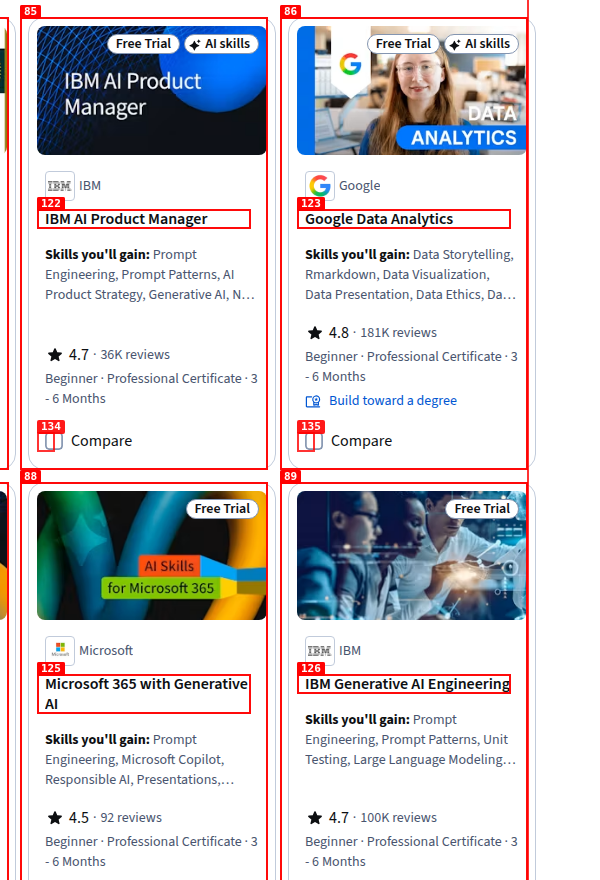
- Prompt engineering
- AI product strategy
- Generative AI
- Product management
- Product lifecycle management
- Responsible AI
- Product roadmaps
- Product planning
- Commercialization
- Innovation
- Machine learning methods
- Generative AI agents
That mix matters because many IT teams do not fail on the model. They fail on the rollout:
- nobody owns the use case
- nobody defines success criteria
- nobody checks risk and governance
- nobody ties the AI tool to an operational workflow
This certificate is aimed at those problem areas.
Practical ROI for IT pros
Good reasons to take it
-
You will get better at AI decision-making. If you are frequently asked whether a chatbot, Copilot workflow, or internal AI assistant is worth it, product thinking helps you answer with structure instead of hype.
-
It supports internal automation ownership. Many IT pros end up owning the intake and prioritization of AI requests even when they are not formal product managers.
-
Responsible AI is not optional anymore. Enterprises want guardrails. Learning how to frame risk, rollout, and governance is useful whether you work in endpoint management, security, or operations.
-
It helps translate between technical and business teams. The people who can explain AI in plain language and still understand the technical constraints are increasingly valuable.
-
It is beginner-friendly. If you are AI-curious but not ready for Python-heavy engineering work, this is a lower-friction starting point.
Reasons to skip it
-
It will not teach you to build AI systems. If you want hands-on model deployment, vector databases, or cloud AI architecture, pick a more technical certification.
-
It may be too PM-focused for solo engineers. If you want a credential that directly improves endpoint automation, scripting, or cloud AI implementation, this is not the sharpest tool.
-
It is not a vendor exam. If your employer only values exam numbers like AI-900 or AI-102, this Coursera certificate will not replace those.
Who should take it
This certificate is a good fit if you are one of these:
- desktop or endpoint engineers moving into automation ownership
- service desk or operations leads who own internal tools
- sysadmins helping define AI use cases for Microsoft 365, support, or knowledge management
- IT managers who need to evaluate AI vendor claims
- junior product or platform owners who want AI vocabulary with structure
It is a weaker fit if you are:
- a hands-on AI engineer who wants code and deployment
- a cloud engineer looking for deep AWS/Azure/Google implementation skills
- someone who only wants the fastest possible resume badge
How it compares to better-known AI cert options
| Certificate | Best use case | Technical depth | IT relevance |
|---|---|---|---|
| IBM AI Product Manager | AI planning, prioritization, roadmap thinking | Low to medium | Medium to high |
| IBM AI Developer | Python, RAG, prompt engineering, app building | Medium to high | High |
| IBM AI Engineering | Broader ML and AI implementation | High | High |
| Google AI | General AI literacy and productivity | Low to medium | Medium |
| AWS AI Practitioner | Entry-level AI/cloud vocabulary | Low | Medium |
The most important distinction is this: IBM AI Product Manager helps you decide what should happen. The more technical certificates help you make it happen.
Bottom line
The IBM AI Product Manager Professional Certificate is worth considering if your IT career is drifting toward AI project ownership, roadmap input, or automation leadership.
It is not the best choice for people who want to engineer AI systems directly. But for IT pros who need to speak the language of AI strategy, responsible rollout, and product planning, it has real practical value.
If your goal is to move from operator to AI initiative contributor, this certificate makes sense. If your goal is to become the person building and deploying the models, choose a more technical path instead.
My recommendation: take it if you want to bridge the gap between IT operations and AI product decisions. Skip it if you want deep hands-on AI engineering skills.