
AWS Certified Data Engineer - Associate: Is It Worth It for AI-Focused IT Pros?
AI projects rarely fail because someone cannot call a model API. They fail because the data arrives late, has the wrong shape, lacks lineage, or cannot be trusted. That is why the AWS Certified Data Engineer - Associate is a useful credential to evaluate if you are an IT professional moving toward AI infrastructure.
This is not an AI-model certification. AWS positions it around data ingestion and transformation, pipeline orchestration, data modeling, lifecycle management, and data quality. For a desktop engineer, sysadmin, or cloud support professional, that makes it a possible bridge from keeping systems available to making the data systems behind AI reliable.
What the credential actually validates
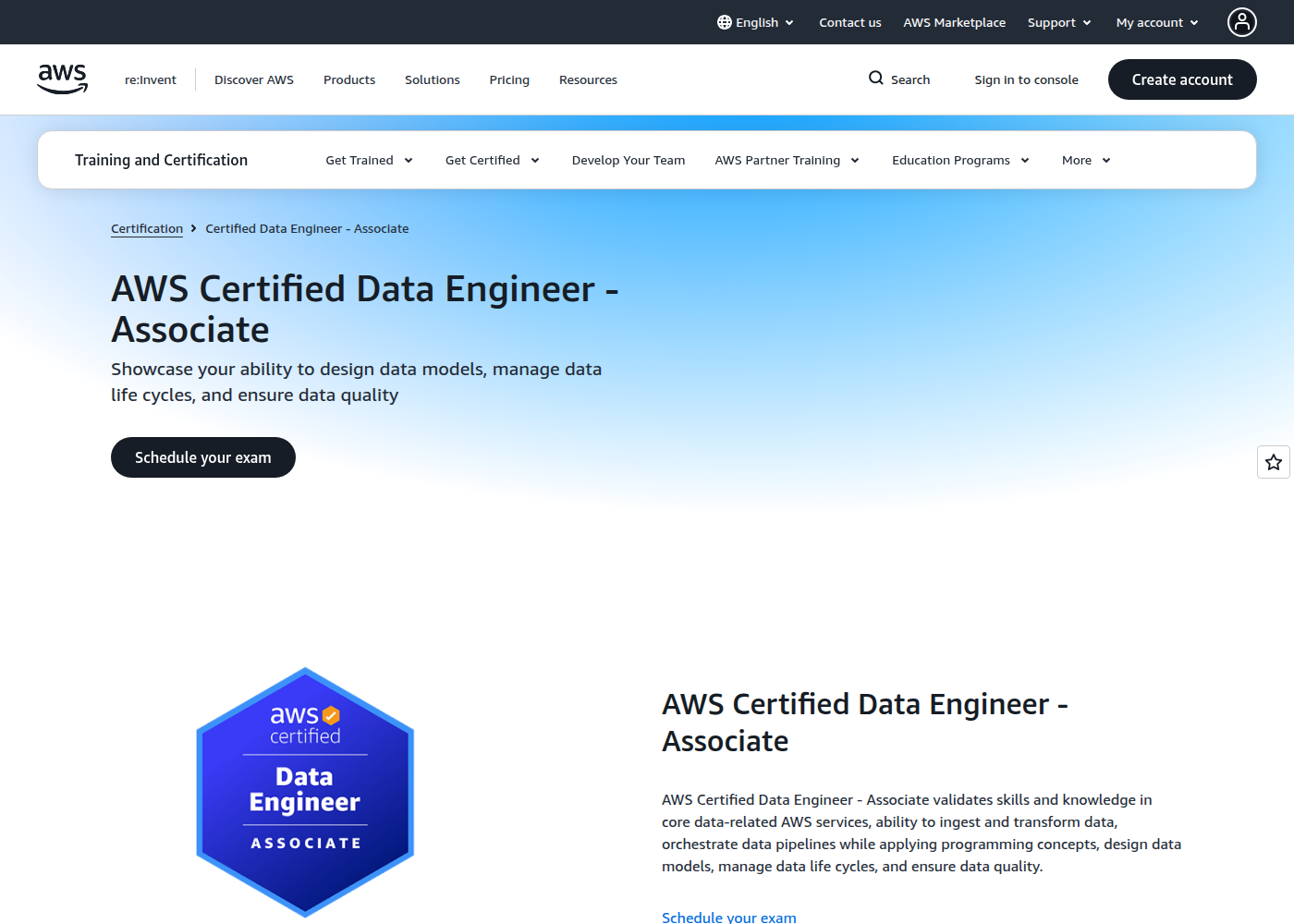
AWS says the certification validates knowledge of core AWS data services and the ability to ingest and transform data, orchestrate pipelines using programming concepts, design data models, manage data lifecycles, and ensure data quality. Those are operational skills: moving data, monitoring it, troubleshooting it, and controlling cost and performance.
That scope matters for AI-focused IT work. Retrieval-augmented generation, analytics copilots, security detections, and model evaluation all depend on dependable pipelines before an engineer thinks about prompts or model selection.
Exam facts and cost
The official AWS certification page currently lists:
- Level: Associate
- Exam: DEA-C01
- Duration: 130 minutes
- Format: 65 multiple-choice or multiple-response questions
- Price: US$150, before local taxes or exchange-rate differences
- Delivery: Pearson VUE test center or online proctored exam
- Languages: English, Japanese, Korean, and Simplified Chinese
The exam is therefore a serious commitment, but it is not a lab-based Applied Skills credential. Passing demonstrates knowledge through a timed exam; it does not by itself prove that you have built a production lakehouse or operated an AI feature store.
Why it can help an IT professional entering AI
1. It turns “AI infrastructure” into concrete work
The certification gives a practical vocabulary for data pipelines, storage, transformation, orchestration, quality checks, and lifecycle policies. Those are the areas where an IT professional can contribute quickly, even before becoming a machine-learning engineer.
2. It complements AI credentials instead of duplicating them
AWS Certified AI Practitioner and machine-learning credentials emphasize AI concepts or model-focused work. Data Engineer - Associate covers the layer underneath: getting usable, governed data to the people and systems that need it. That makes it a better fit for cloud operations, platform engineering, and data-platform support than for someone seeking a pure model-development credential.
3. The preparation path includes practical practice options
AWS recommends a four-step preparation plan: understand the exam with exam-style questions, refresh AWS knowledge and skills, review and practice, then assess readiness with the official practice exam. The page also points learners toward AWS Builder Labs, Cloud Quest, AWS Jam, and SimuLearn. Those practice environments are valuable because reading service descriptions alone does not build troubleshooting instincts.
Where the certification is not enough
Do not use this certification as proof that you can design a complete AI platform. It does not replace experience with IAM, networking, observability, Python or SQL, security controls, or a specific AI workload such as RAG or model serving.
It also does not guarantee that an employer uses AWS. If your target environment is Azure or Google Cloud, the transferable concepts remain useful, but the service names and implementation patterns will not map one-to-one.
A practical study plan for sysadmins and cloud support engineers
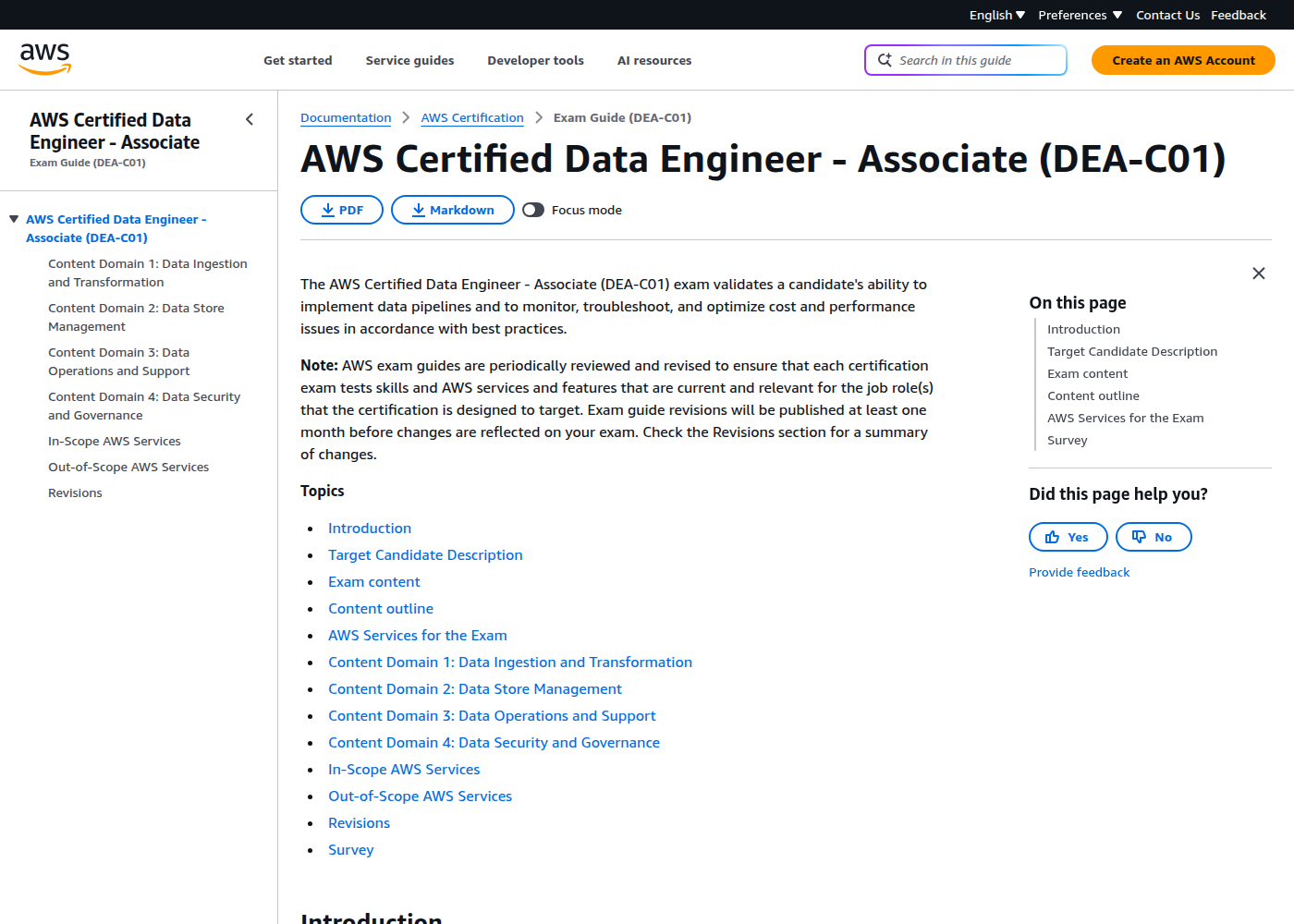
- Start with the exam guide, not a generic data-engineering course. Turn every domain into a checklist of services and operations.
- Build one small pipeline. Ingest files or events, transform them, store curated output, and add a quality check.
- Add failure deliberately. Break permissions, schema assumptions, or a schedule and document how you detect and recover from the failure.
- Practice cost and lifecycle decisions. AI data grows quickly; retention, partitioning, storage tiers, and query patterns matter.
- Use the official practice questions late. They are most useful after you have built and debugged something, not as your only learning method.
Verdict: worth it for the right AI-adjacent role
AWS Certified Data Engineer - Associate is worth considering if your goal is cloud data operations, AI platform support, analytics engineering, or infrastructure work around AI products. It is especially defensible for an IT professional who already understands access control, incident response, automation, and basic AWS administration.
It is a weaker first choice if you want prompt engineering, model training, or a vendor-neutral introduction to AI. In that case, start with a fundamentals credential or a project-based AI course, then return to data engineering when you are ready to own the pipeline rather than only consume its output.
The strongest version of this credential is not the badge alone: it is the badge plus a small, documented AWS pipeline that shows ingestion, transformation, quality validation, monitoring, and recovery.