Microsoft Certified: Security Operations Analyst Associate (SC-200): Worth It for AI-Focused IT Pros?
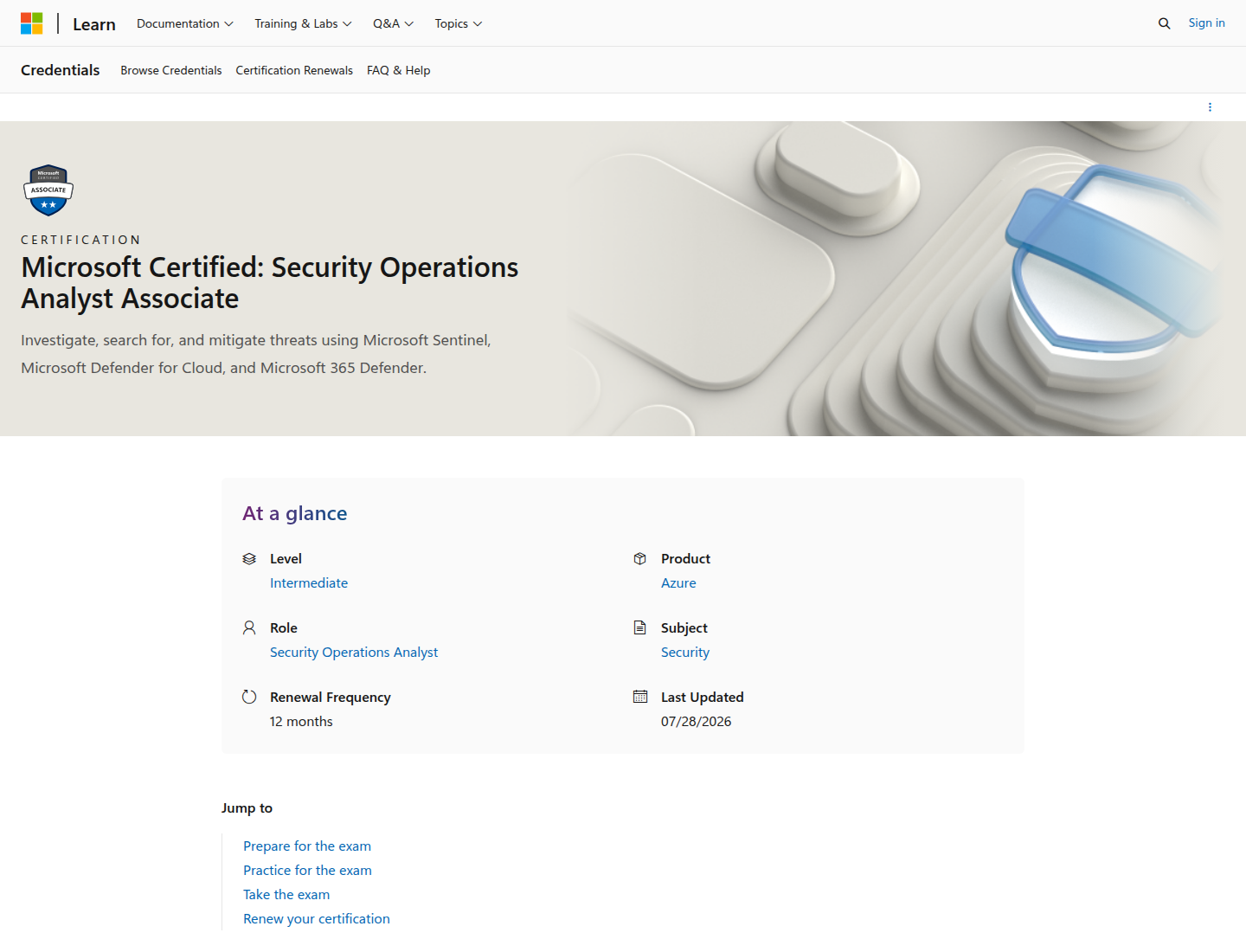
Microsoft’s Security Operations Analyst Associate certification validates the SC-200 exam. It is aimed at professionals who investigate threats, respond to incidents, hunt for suspicious activity, and engineer detections across Microsoft security services.
For AI-focused IT professionals, the important question is not whether SC-200 is an AI certification. It is not. The question is whether the security-operations skills it measures are becoming necessary for people who deploy, govern, and support AI systems.
Quick verdict
| Category | Verdict |
|---|---|
| Provider | Microsoft |
| Credential | Microsoft Certified: Security Operations Analyst Associate |
| Exam | SC-200: Microsoft Security Operations Analyst |
| Level | Intermediate |
| Exam duration | 100 minutes |
| Renewal | Every 12 months; Microsoft says renewal is free through an online assessment |
| Main products | Microsoft Sentinel, Defender XDR, Defender for Endpoint, Defender for Cloud, Entra ID, and Purview |
| Core skills | Manage security operations, respond to incidents, perform threat hunting |
| AI relevance | Strong operational foundation for securing AI agents, Copilots, data, and cloud workloads |
| Best fit | SOC analysts, security-minded sysadmins, endpoint engineers, and cloud support professionals |
Official sources: Microsoft certification page, SC-200 study guide, and Microsoft security operations learning path.
What SC-200 actually measures
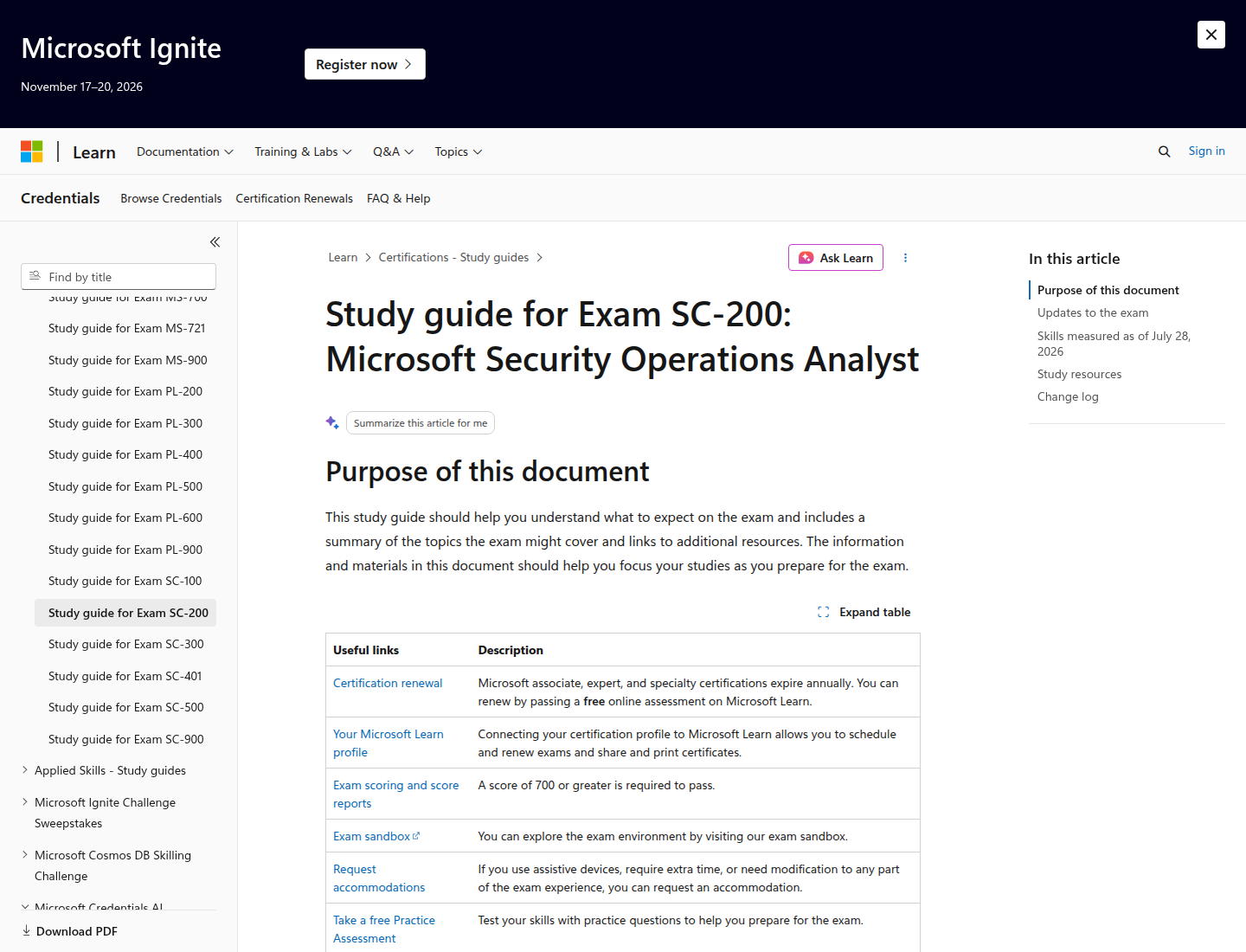
Microsoft currently groups the exam into three areas:
- Manage a security operations environment — 40–45%
- Respond to security incidents — 35–40%
- Perform threat hunting — 20–25%
The first area is infrastructure and detection engineering. It includes configuring Microsoft Sentinel, selecting data connectors, managing retention, creating workbooks, building analytics rules, configuring automation rules and playbooks, and managing Defender XDR settings.
The incident-response section covers alerts and incidents in Defender XDR, Defender for Office 365, Microsoft Purview, and Defender for Cloud. The threat-hunting section expects familiarity with Advanced Hunting, KQL, threat indicators, and investigation across endpoints and cloud services.
This is practical security operations—not a general “AI for everyone” exam. The certification page also lists familiarity with AI agents and Copilots among the expected background knowledge, which is a useful signal for modern Microsoft security roles.
Why SC-200 matters more as AI adoption grows
AI introduces additional identities, data flows, plugins, APIs, model endpoints, and automation paths. Someone must determine whether an unusual token use is a compromised agent, whether a prompt exposed sensitive data, and whether an automated response is safe to run.
SC-200 does not certify those AI-specific decisions by itself. It does provide the operational mechanics behind them:
- Centralize evidence. Sentinel and Defender telemetry give an analyst a place to correlate endpoint, identity, email, and cloud signals.
- Write detections. Advanced Hunting, KQL, and Sentinel analytics rules turn suspicious behavior into repeatable detection logic.
- Automate carefully. Playbooks and automation rules can shorten response time, but they also require scoped permissions, conditions, logging, and rollback.
- Investigate identities and data. Entra ID and Purview matter when AI tools access business information or act on behalf of users.
- Operate across environments. Microsoft describes the role as covering multi-cloud and on-premises environments, not only a single Azure workload.
For an endpoint engineer, this translates into a concrete career advantage: you can discuss AI adoption in terms of telemetry, least privilege, detections, incident evidence, and controlled remediation rather than vague policy language.
Exam logistics and preparation
Microsoft states that the SC-200 assessment provides 100 minutes and may include interactive components. The exam is proctored, and the listed languages include English, Japanese, Chinese, Korean, French, German, Spanish, Portuguese (Brazil), Italian, and Traditional Chinese. Microsoft lists a passing score of 700 or greater in the study guide.
The certification expires annually. Microsoft says role-based and specialty certifications can be renewed at no cost by passing an online assessment on Microsoft Learn. That reduces the long-term maintenance cost, but it also means candidates should expect to keep learning as Sentinel and Defender change.
A sensible preparation sequence is:
1. Learn KQL before memorizing portal clicks
Practice filtering, joining, projecting, summarizing, parsing, and time-window analysis. Use a small lab dataset and explain what each query proves. The goal is investigation, not copying a query from a search result.
2. Build a Sentinel detection loop
In a lab, connect an approved data source, create an analytics rule, generate a test alert, investigate the incident, and document the evidence. Then add an automation rule or playbook that performs a low-risk action such as notification or ticket creation.
3. Practice Defender incident response
Work through endpoint, identity, email, and cloud alerts. Record the difference between an alert, an incident, an entity, and an action. Test what information survives after containment and what an analyst still needs to collect.
4. Add an AI workload to the threat model
Map an internal Copilot, agent, or API workflow. Identify its identities, data sources, tools, logs, approval points, and failure modes. Then ask how Sentinel, Defender, Entra, and Purview could provide evidence or controls.
Is SC-200 useful for desktop engineers and sysadmins?
Strong fit
SC-200 is a good choice if your next role includes:
- endpoint detection and response;
- Microsoft Defender administration;
- Sentinel or SIEM support;
- identity and cloud incident response;
- threat hunting with KQL;
- securing Copilot or agent deployments; or
- security automation and operational governance.
It is especially useful for a desktop engineer moving toward security operations because it builds on Windows and endpoint knowledge while adding cloud telemetry, identity, investigation, and response.
Weak fit
It is a weaker first investment if your work is strictly hardware break/fix, basic application packaging, or user support with no security responsibility. It is also not the right credential for someone primarily building ML models, training neural networks, or designing data science pipelines. In those cases, a machine-learning or data-engineering certification will align more directly.
A portfolio project to build alongside SC-200
Create a read-only AI-assisted security triage runbook for a fictional service desk:
- ingest a small set of approved Windows and Entra events;
- use KQL to identify a suspicious sign-in and endpoint sequence;
- create a Sentinel analytics rule with a clear severity and entity mapping;
- produce an incident summary that cites the underlying events;
- use an AI assistant only to draft the summary or suggest query variations;
- require a human approval before isolation, account disablement, or remediation; and
- log the query, evidence, analyst decision, and final action.
This demonstrates the distinction employers care about: AI may accelerate analysis, but the analyst still owns evidence quality, permissions, decisions, and recovery.
Final recommendation
SC-200 is worth considering for AI-focused IT professionals who want a Microsoft security-operations path. It is not an AI credential, but its coverage of Sentinel, Defender, KQL, automation, identity, and data protection gives it strong supporting value as organizations deploy Copilots and agents.
Choose it when you want to operate and defend Microsoft environments. Pair it with a small, auditable AI-security project. Do not present the badge as proof that you can build an AI model or independently run a full SOC; present it as evidence that you understand how detection, investigation, response, and governance work in production-oriented environments.