
Google Cloud Professional Data Engineer: Worth It for AI-Focused IT Pros?
Google Cloud’s Professional Data Engineer is not branded as an AI certification, but it is one of the most relevant credentials for IT professionals who want to operate the data foundations that AI systems depend on. Models, agents, and analytics products are only as reliable as the pipelines, storage, governance, and monitoring behind them.
Quick verdict
| Category | Verdict |
|---|---|
| Provider | Google Cloud |
| Credential | Professional Data Engineer |
| Best for | Cloud engineers, platform teams, data engineers, and AI infrastructure practitioners |
| Exam | Professional Data Engineer |
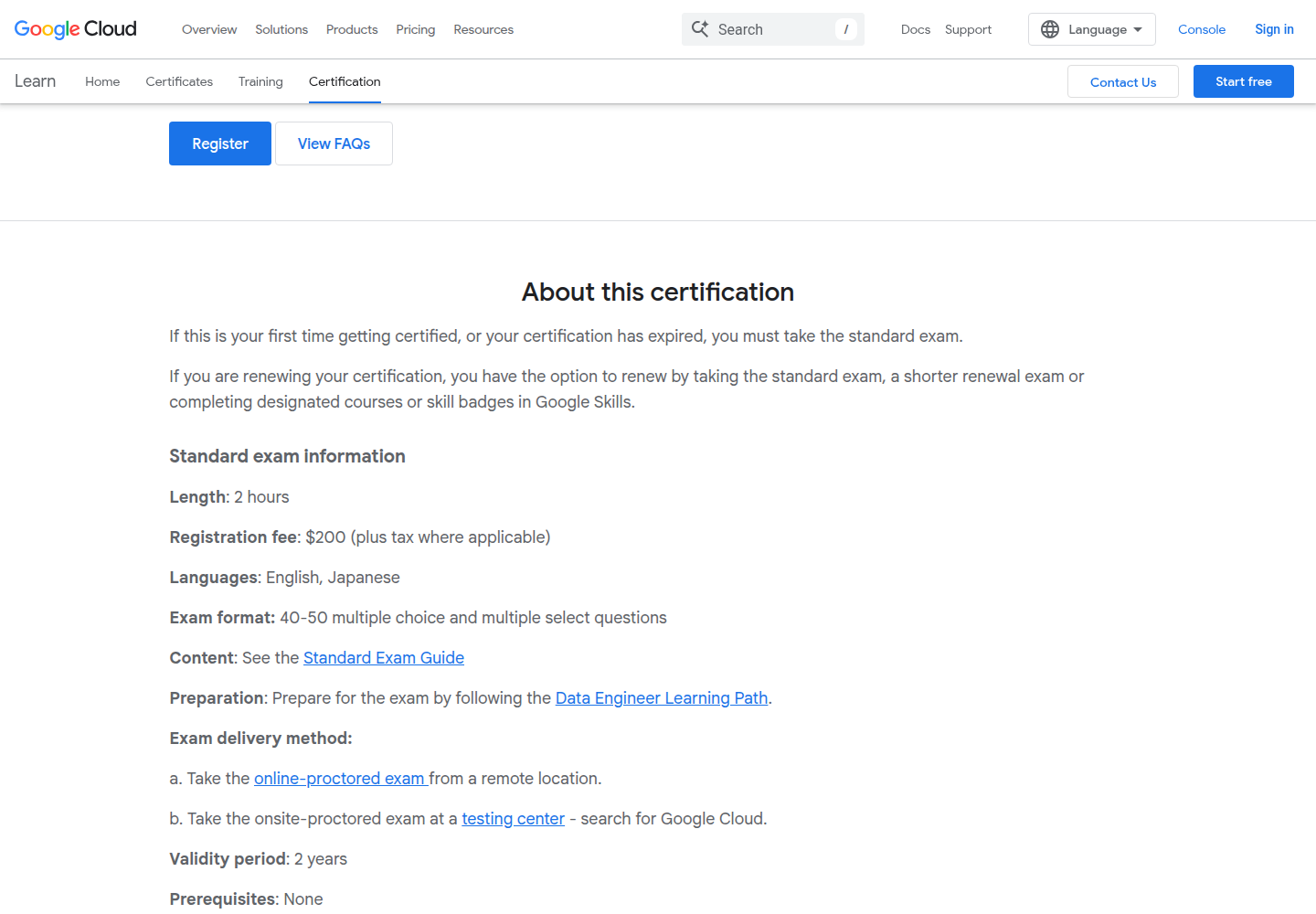
| Length | 2 hours |
| Format | 40–50 multiple-choice and multiple-select questions |
| Price | $200 plus applicable tax |
| Languages | English and Japanese |
| Validity | 2 years |
| Prerequisites | None; Google recommends 3+ years of industry experience, including 1+ year designing and managing Google Cloud solutions |
| AI relevance | High when your AI work depends on governed, reliable, production data |
Bottom line: it is worth it for an IT professional moving toward data platforms or AI operations, but it is too specialized if your immediate goal is basic AI literacy or end-user Copilot adoption.
What the credential actually proves
Google describes the role as designing and building systems that collect, transform, store, and use data for business and machine-learning outcomes. That makes the credential an infrastructure and engineering signal—not a prompt-engineering badge.
The practical areas to prepare for include:
- designing data-processing systems
- ingesting and transforming data
- storing and securing data
- preparing data for analysis and machine learning
- maintaining and monitoring data-processing workloads
For AI-focused IT teams, these map directly to recurring production problems: stale retrieval data, inconsistent schemas, excessive permissions, unreliable batch jobs, and pipelines nobody can troubleshoot during an incident.
Why it matters to AI-focused IT professionals
A help-desk or endpoint engineer does not need this certification merely because a company is experimenting with generative AI. The credential becomes useful when the role touches the systems around the model:
- RAG and enterprise search need data discipline. Documents must be collected, normalized, permissioned, indexed, and refreshed.
- Machine-learning workflows need repeatability. Training and inference data require lineage, validation, and monitoring rather than ad-hoc exports.
- AI governance starts with the data layer. Retention, access control, classification, and auditability are platform responsibilities.
- Incident response needs observable pipelines. When an AI answer is wrong, teams need to determine whether the cause was the model, retrieval layer, source data, or transformation logic.
This is why the certification can be a strong bridge for a cloud administrator or systems engineer who is becoming responsible for AI platforms without becoming a research scientist.
Exam logistics and preparation
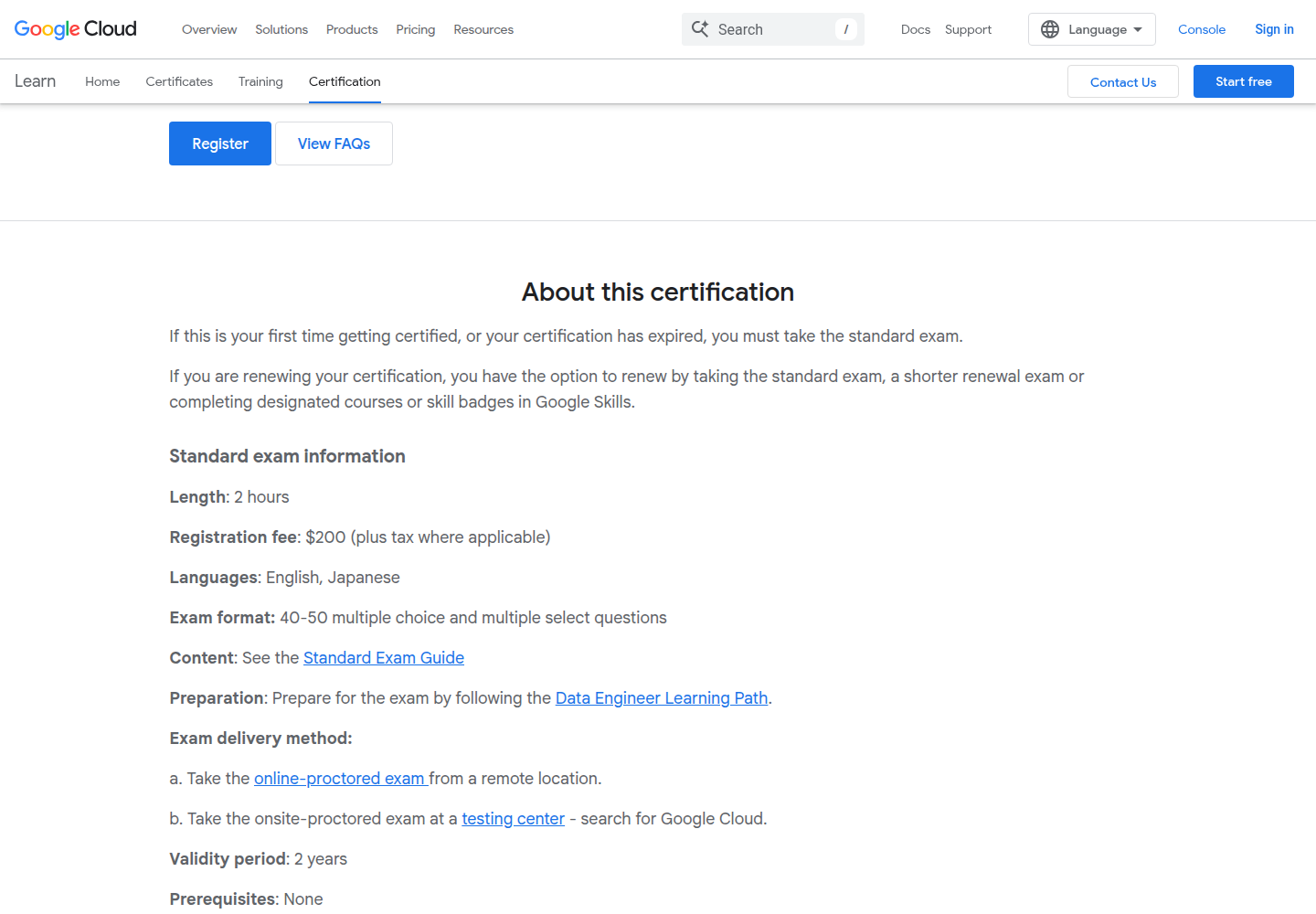
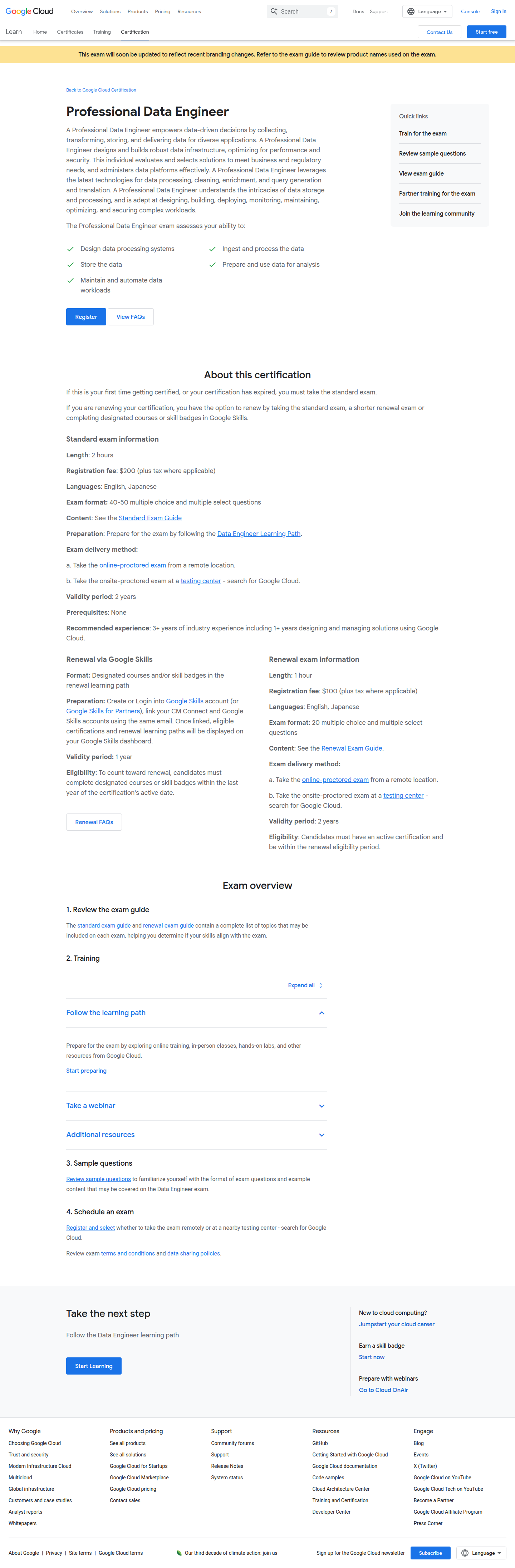
The official page lists a two-hour exam with 40–50 multiple-choice and multiple-select questions. The registration fee is $200 plus tax where applicable. The exam can be taken online with remote proctoring or at a testing center, and the certification is valid for two years.
Google lists no formal prerequisite, but its recommended experience is meaningful: three or more years in industry, including at least one year designing and managing solutions on Google Cloud. Treat that as a readiness signal. If you have only used BigQuery casually, the exam objectives will expose gaps quickly.
Start with Google’s Data Engineer Learning Path, then build a small portfolio system while studying. A useful project for an IT professional is a governed support-knowledge pipeline:
- ingest approved support documents
- validate and transform the content
- apply identity-aware access controls
- publish it to an analytics or retrieval store
- monitor freshness, failures, and cost
- document how an operator investigates bad or missing data
That project gives you something concrete to discuss in interviews and helps connect exam concepts to AI operations.
Who should take it
This credential is a strong fit if you are:
- a Google Cloud administrator moving into data or AI platform work
- a DevOps or SRE engineer supporting analytics and ML services
- a data engineer responsible for pipelines feeding AI applications
- an IT architect designing governance for enterprise AI data
- a systems engineer building operational evidence for a cloud migration
It is a weaker fit if you want a fast introductory AI credential, work exclusively in Microsoft 365 and Azure, or do not expect to operate data systems. In those cases, a foundational AI credential or a platform-specific applied-skills lab will usually produce faster ROI.
Professional Data Engineer versus an AI certification
This credential should not be confused with Google Cloud’s Professional Machine Learning Engineer certification. The Data Engineer exam focuses on the data-processing systems that make analysis and ML possible. It does not by itself prove that you can select models, train them, tune them, or deploy an end-to-end ML service.
That distinction is useful for career planning:
- Choose Professional Data Engineer when your target work is pipelines, storage, governance, reliability, and data products.
- Choose a machine-learning credential when you will own model development and ML deployment decisions.
- Choose a foundational AI credential when you need vocabulary and business context before a technical specialization.
For many IT professionals, data engineering is the more realistic first technical move because it builds on existing strengths in permissions, automation, operations, and troubleshooting.
Final recommendation
Yes—Google Cloud Professional Data Engineer is worth it for AI-focused IT pros who will operate the data layer behind analytics, machine learning, or retrieval-based applications. The $200 exam is a serious investment, and the recommended experience is not entry-level, but the credential has a credible connection to production AI reliability.
Do not pursue it just to add “AI” to a résumé. Pursue it when you can point to a real data platform responsibility, then pair the certification with a documented pipeline project covering access, validation, monitoring, and incident response. That combination is much stronger than a badge alone.
Official certification page: https://cloud.google.com/learn/certification/data-engineer
Research checked against the official Google Cloud Professional Data Engineer certification page on August 17, 2026. Exam pricing, languages, objectives, and delivery options can change; verify the provider page before registering.