Google Cloud Professional Cloud Security Engineer: Worth It for AI-Focused IT Pros?
AI adoption has made cloud security a practical AI career skill. The Google Cloud Professional Cloud Security Engineer certification is a single, security-focused credential for professionals who need to secure cloud workloads—including AI workloads—rather than merely discuss generative AI.
It is not an AI model-building certification. It validates the security architecture, identity, data protection, network defense, operations, and compliance knowledge needed when an organization runs AI services in Google Cloud.
Quick verdict
| Category | Verdict |
|---|---|
| Best for | Cloud security engineers, security-minded sysadmins, platform engineers, and IT pros supporting AI workloads |
| Provider | Google Cloud |
| Certification | Professional Cloud Security Engineer |
| Exam length | 2 hours |
| Price | $200 plus applicable tax |
| Questions | 50–60 multiple-choice and multiple-select questions |
| Languages | English and Japanese |
| Prerequisites | None listed by Google Cloud |
| Recommended experience | 3+ years industry experience, including more than 1 year designing and managing Google Cloud solutions |
| Delivery | Online-proctored or onsite-proctored |
| ROI | Strong when your role includes cloud security, AI governance, or regulated workloads |
What the certification actually covers
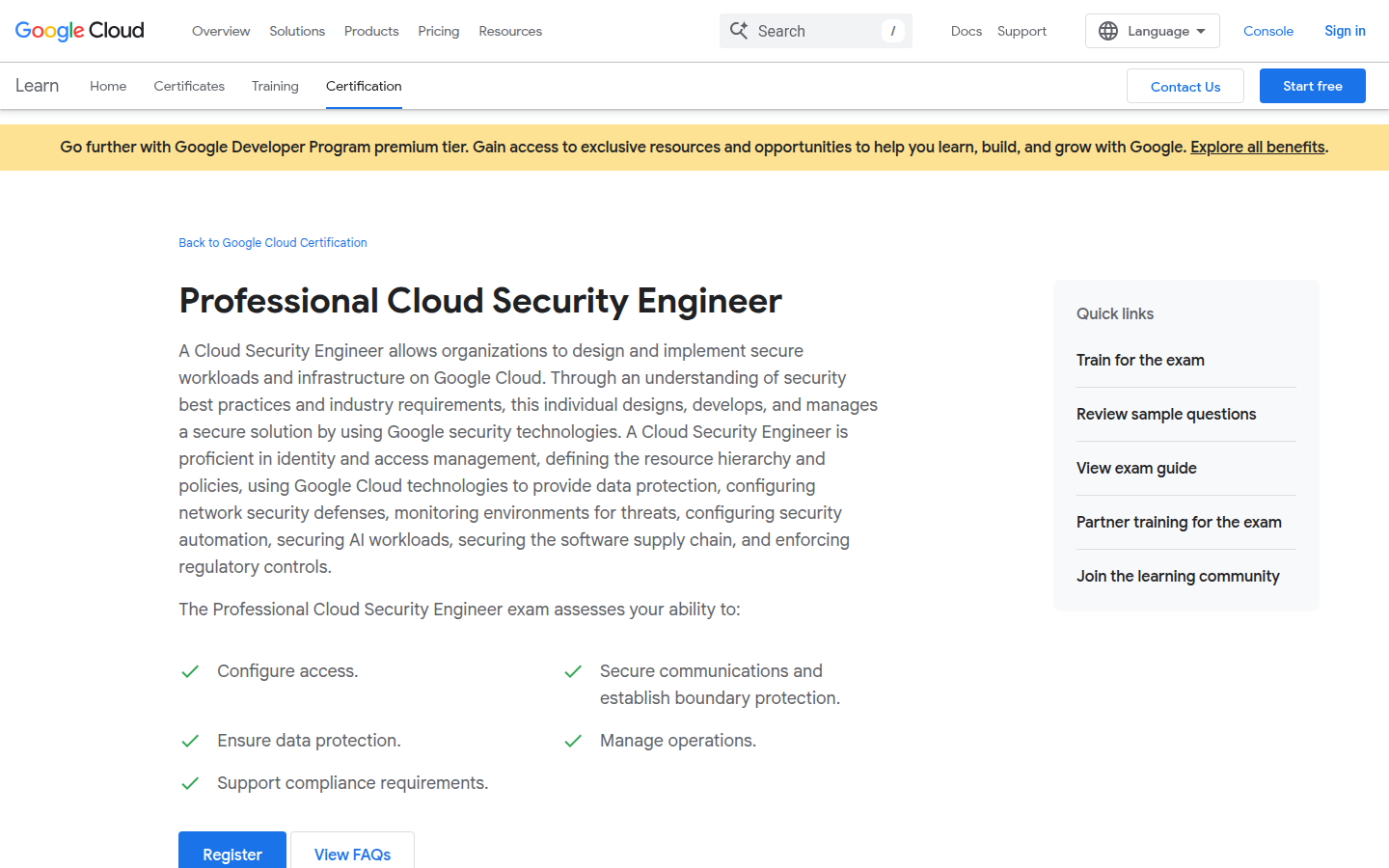
Google Cloud says the role is responsible for designing and implementing secure workloads and infrastructure. The exam scope includes:
- configuring access and identity controls
- securing communications and boundary protection
- protecting data
- managing security operations
- supporting compliance requirements
The AI connection is explicit: Google’s description includes securing AI workloads alongside software supply-chain security, threat monitoring, security automation, and regulatory controls. That makes this credential more relevant to AI infrastructure than a generic cloud administration badge.
Why it matters for AI-focused IT work
A production AI rollout creates familiar IT security questions:
- Who can invoke the model or data service? Identity and access management must be designed before a chatbot or AI API becomes an enterprise dependency.
- What data can be sent to an AI workload? Data protection and resource-policy knowledge helps define boundaries around sensitive information.
- How is the service isolated? Network defenses and boundary protection matter when AI services connect to internal systems.
- How do you detect abuse or misconfiguration? Security operations and automation are more useful than a one-time architecture review.
- How do you prove control effectiveness? Compliance requirements affect logging, access reviews, retention, and evidence collection.
The certification will not teach you every model-specific safety technique. Its value is that it gives you the cloud-security foundation needed to review AI systems responsibly.
Exam logistics and difficulty
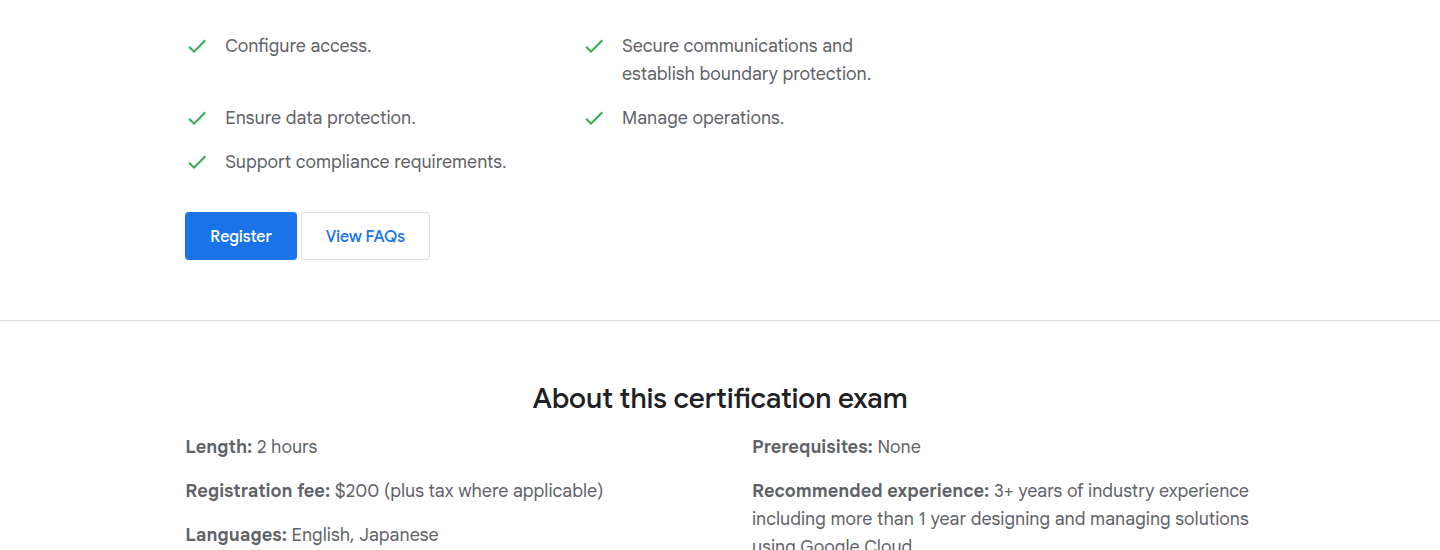
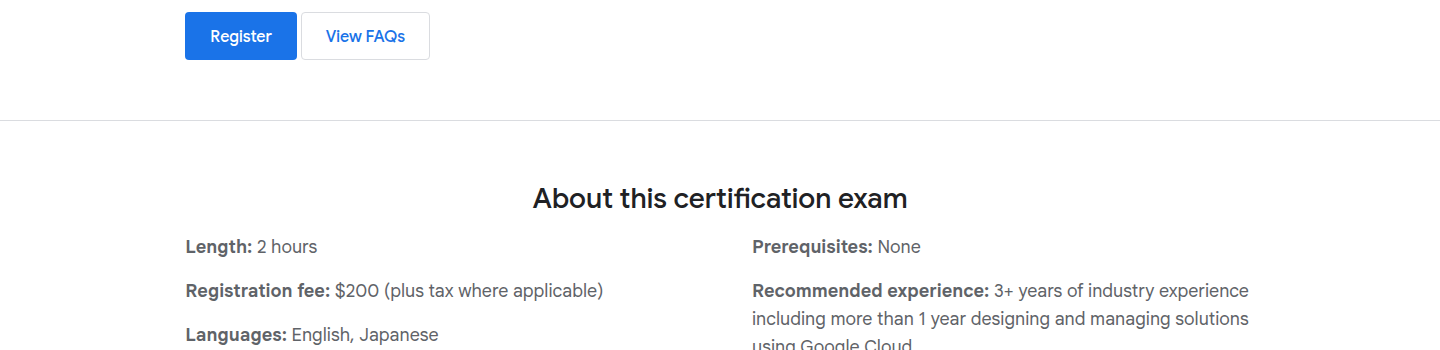
Google Cloud lists a two-hour exam with 50–60 multiple-choice and multiple-select questions. Candidates can test remotely or at a testing center. There are no formal prerequisites, but Google’s recommended experience is substantial: three or more years in the industry, including more than one year designing and managing Google Cloud solutions.
That recommendation is the clearest warning for desktop engineers or generalist sysadmins. The absence of prerequisites does not make this a beginner exam. If you have never worked with IAM, resource hierarchies, VPC networking, logging, data protection, or cloud compliance, plan for a foundation phase before exam preparation.
The registration fee is $200 plus tax where applicable. Google Cloud’s page also directs candidates to an exam guide, sample questions, and a Professional Security Engineer learning path with online training and hands-on labs.
A practical preparation plan
1. Map your current gaps
Use the exam guide as a checklist. Separate topics you can explain from topics you have configured. For AI-oriented roles, pay particular attention to identity boundaries, service-to-service access, data protection, network controls, monitoring, and automation.
2. Build a small security lab
Create a low-cost Google Cloud sandbox and document a repeatable design:
- separate projects or environments
- least-privilege service accounts
- explicit resource hierarchy and policies
- private connectivity where appropriate
- centralized logging and alerting
- protected secrets and data stores
- an audit trail for an AI API or model endpoint
The lab does not need to be production-sized. It needs to make the control relationships concrete.
3. Add an AI workload threat model
Take a simple internal assistant architecture and ask what happens if a user, service account, prompt, retrieved document, or API key is compromised. Record trust boundaries and mitigations. This turns “secure AI workloads” into an operational exercise instead of a memorization phrase.
4. Use sample questions diagnostically
Google states that sample questions familiarize candidates with format and example content, but they are not a prediction of the exam result. Use them to identify weak domains, then return to the exam guide and lab work.
Is it worth it for desktop engineers and sysadmins?
Usually yes, if your responsibilities are moving toward cloud security or AI governance. The credential can support a transition from endpoint operations into cloud security, platform security, identity, or security architecture.
It is a weaker first choice if your immediate goal is to build AI applications, write Python, or learn prompt engineering. In that case, a developer or applied AI credential may produce more direct portfolio evidence. This certification is about protecting the environment in which AI operates.
For Microsoft-heavy teams, the Google Cloud badge is also not a substitute for Microsoft security or Azure credentials. Its differentiator is portability: the principles around identity, data protection, network boundaries, operations, and compliance are useful beyond one product, while the exam still proves Google Cloud-specific competence.
Bottom line
The Google Cloud Professional Cloud Security Engineer is a credible AI-adjacent career credential because its official scope includes securing AI workloads without pretending that cloud security and model development are the same job.
Choose it when you want to own secure AI infrastructure, cloud controls, or governance. Before paying the $200 exam fee, complete the official exam guide, build a small Google Cloud security lab, and confirm that the recommended experience gap is manageable. For the right IT professional, that preparation produces more durable career value than a broad AI-awareness certificate.